Friday, October 31, 2014

Announcement: Upcoming Series, Women of the Bible: Facts and Opinions

(Link)

I'm happy to announce the next series to come from this blog! I'll be writing on the more and lesser-known women from the Bible from an Israelite perspective. I'll cover truths and fictions, impact on Israelitism, and what their stories mean today (for both men and women); for many of the stories, I'll be focusing on marriage dynamics. Expect factual learning mixed with critique, analysis, and some snarkiness (no general milquetoast writings from me, you can be assured). Below, in no particular order, you'll find a list of the women I'm planning to cover. The list will be updated as things develop.

Old Testament
Sarah/Hagar
Zipporah
Leah/Rachel
Ruth/Naomi
Deborah/Jael
Lot's wife/daughters
Tamar
Rahab
Hannah
Esther
Jezebel
New Testament (Undecided here, too. I'm not as well-versed in these ladies and their doings)
Mary/Martha
Mary
Salome/her mom


Sunday, October 26, 2014

Update: November

Well, things have been getting rather busy around here in the last few weeks. I just finished up my series on the fall holidays, and it may be a small bit before a new post comes out. Mostly because I'm not sure where to go next (ha). I'm expecting to write some posts about the Song of Solomon, maybe one on skirts/dressing norms, and a few general-type posts as they come to mind. If you'd like to see a post on anything in particular/if you have any questions you'd like answered, please, leave a comment on this post, and I'll do my best!

Celebrating Sukkot

[Note: Sorry this post is so late in coming! I've had a busy couple of weeks. I really wanted to get this out in the weekend of Sukkot, but, you know what they say about, "the best-laid plans of mice and men"....Anyhow, I hope you enjoy the post!]
Following along in our "Fall Holiday" series, we have our last holiday post for the year; Sukkot, also called the Feast of Tabernacles. Sukkot is the last Israelite holiday on the calendar--(some of us celebrate Hanukkah, but it's not a mandatory holiday like those of Leviticus 23)--and, speaking honestly, Sukkot's the most fun. Sukkot has the least restrictions and most pro-party rules of any Israelite holiday.

Bigger Sukkot gatherings may look something like this (Link)

Let's take a look at what the Bible has to say (Lev 23:33-44, removing a few for brevity and clarity, marked with "..."):

     "And the Lord spake unto Moses, saying, Speak unto the children of Israel, saying, The fifteenth day of this seventh month shall be the feast of tabernacles for seven days unto the Lord. On the first day shall be an holy convocation: ye shall do no servile work therein....on the eighth day shall be an holy convocation unto you...it is a solemn assembly; and ye shall do no servile work therein....Beside the sabbaths of the Lord, and beside your gifts, and beside all your vows, and beside all your freewill offerings, which ye give unto the Lord.Also in the fifteenth day of the seventh month, when ye have gathered in the fruit of the land, ye shall keep a feast unto the Lord seven days: on the first day shall be a sabbath, and on the eighth day shall be a sabbath. And ye shall take you on the first day the boughs of goodly trees, branches of palm trees, and the boughs of thick trees, and willows of the brook; and ye shall rejoice before the Lord your God seven days. And ye shall keep it a feast unto the Lord seven days in the year. It shall be a statute for ever in your generations: ye shall celebrate it in the seventh month.Ye shall dwell in booths seven days; all that are Israelites born shall dwell in booths: That your generations may know that I made the children of Israel to dwell in booths, when I brought them out of the land of Egypt: I am the Lord your God. And Moses declared unto the children of Israel the feasts of the Lord."

    To summarize, from day 15 of the seventh month for seven days, the Feast of Tabernacles is to be celebrated. Starting on the 15th, we must "dwell" in "booths" for seven days. The 8th day is an extra Sabbath, and so is the first day. We are supposed to feast, and use branches to "rejoice before the Lord". It's a happy holiday. It's a harvest holiday. 

    The booths rule comes to commemorate the 40 years the Israelites spent wandering in the desert after they were freed from Egypt. In that way, it's both happy and solemn. After all, the Israelites were only in the desert thanks to their cowardice and fecklessness (see Numbers 32 for the whole story). However, the remembrance is also happy; after all, God still protected the Israelites and took care of them during this time, and they were headed to the Promised Land (albeit for the second time...). 

     We celebrate Sukkot by doing exactly what is outlined above. I took off of work for the first and eighth days (being Wednesday, 10/8 and Wednesday, 10/15, respectively). Sven and I set up our tent in our backyard and slept there every night. We feasted and celebrated during the days (waving branches, dancing, singing, etc etc.). In addition, we got to have a little extra fun. My sister, who attends the University of Kansas, came out to stay with us from Friday to Monday. For us, this meant extra fun; for her, it meant fulfillment of the "feasting" part as well as the "convocation" part (college students poorness and, surprisingly enough, it's hard to find other Israelites where she is).

Pictured: Feasting, Family, and general Festivity

     There were good bits and bad bits of this holiday, as there typically are in any 7-day span of time. One of the worst things was the weather. Where we live, it tends to be very, very, very dry. Drought dry. Since it's so dry and flat, it also tends to be warm. We (foolishly) counted on this when making our initial Sukkot plans. Our yard it flat, and there's a  nice secluded corner of the backyard where the ground is shielded on two sides by the house. This is where we first set up our tent. It was shielded from the wind and (rather annoying) streetlights, as well as from any prying eyes there might be. This worked out well. The first night. It was balmy; the full moon lit up the yard with its gentle glow. There was a slight breeze. We packed our tent with a sleeping bag and two quilts, and we were as toasty as bugs in rugs. The second night, the storms hit. Unfortunately for us, the spot we'd picked for our tent also happens to be the only spot in our yard that floods when it rains. That first rainy night, we spent about an hour debating; should we move the tent? Was it raining hard enough? Could we somehow divert the water? What would we do if the tent flooded? And, gosh darn, wasn't it hard to talk over all this thunder? (We were in the tent at the time) When the storm finally broke (for about an hour, around midnight) we moved our bedding into the back of our (covered) truck, and pulled the truck into the driveway. We slept in the truck that night and moved the tent the next day. Lesson learned; plan for all weather, not just the weather you typically have.

Like this. But at night. And windy. Very windy. (link)

     After that, the weather continued to be terrible. Windy, rainy, and dropping into the (windy and rainy) forties at night. My sister, who did not have a tent, slept in the truck while she was here, but we were in the tent. The wind and water pelting against a rain fly can be surprisingly loud. Needless to say, I showed up to my job a little sleepy and frazzled more than once during the week. Thankfully, we did not have another flooding problem, though we were worried about the wind carrying the tent away on the last night, so we set it up in our basement and slept down there. This is my fourth Sukkot, and, I have to say, the weather has been the worst. My first Sukkot, the temperatures were freezing, and Sven and I were sleeping in my truck (read: "metal tin can that acts as a refrigerator in cold temps), but we wore (really) warm clothes, swaddled ourselves in (really) tick  and it was okay. Last year was simply gorgeous; we went out-of-state to visit some Israelite friends/relatives, and it was maybe 60 degrees each night. This time was just bad. However, the good bits were more than good enough to outweigh the bad.
Pictured: A bad place to set up a tent.

     For one, though I don't like to brag (cough cough), Sven and I are really good cooks. For this week, we have an obligation to pull out all the stops and cook delicious, filling, several course meals every night (that's what we take it to mean, anyway. Let's put the "feast" into "Feastday" and all that....)
Tasty and special Sukkot Salmon

 All-in-all, it was a great time. People sometimes ask, "Don't you miss Christmas/Easter/Halloween?", and the answer is no. For starters, my family was never huge on Easter/Halloween, and my dad very often pointed out the pagan nature of Christmas. The holidays I celebrate now have more meaning, are actually a part of my religion, and they're just better. I'd trade one day of presents for a week of camping, feasting, and hanging out with family any day. In addition to all this, they're fun in a new way because they're something I've done most with myself or with Sven from the very beginning. We get to celebrate our way. We don't have someone else telling us how to do or what to do. We look at the Bible, make sure we do what it says, and we can add our own bits on the way. For example, Sukkot is a time for board/card/etc games for us. I'm not exactly sure why. We don't love board games. We don't really play them normally, but when we get to be with family, it just seems fitting. So, when my sister was here, we played several nights' worth of paper telephone and the forehead-guess-who-I-am game. Another thing we decided was certain dishes to be cooked by our family every Sukkot in the future. One of which being 호떡 ("Hottoek", a type of Korean snack I'm sure I filled you in on in my Korean food post). We finally found a recipe online, and we were able to make them. The hot, gooey, sweet treats seem like a perfect fit for a fall holiday. So, we decided from hereafter, we shall always make 호떡 on the first day of Sukkot.
Pictured: Pure Happiness
To finish off this post; what should you take away? 1) When camping in the fall, always keep tabs on the weather forecast and plan accordingly. 2) Don't let small troubles get in the way of doing the right thing/having fun. 3) If you believe in it, read your Bible. Read it closely. There's more there than what meets the eye, and it can open up a whole new world for you. Happy fall!


Wednesday, October 8, 2014

A Guide to Yom Kippur: The Day of Atonement


The Day of Atonement is the most serious holiday in the Israelite calendar. Though it only lasts for one day, it is the most restrictive and strict.

The requirements are as follows (From Leviticus 23:26-32, KJV):
And the Lord spake unto Moses, saying, Also on the tenth day of this seventh month there shall be a day of atonement: it shall be an holy convocation unto you; and ye shall afflict your souls, and offer an offering made by fire unto the Lord. And ye shall do no work in that same day: for it is a day of atonement, to make an atonement for you before the Lord your God. For whatsoever soul it be that shall not be afflicted in that same day, he shall be cut off from among his people. And whatsoever soul it be that doeth any work in that same day, the same soul will I destroy from among his people.Ye shall do no manner of work: it shall be a statute for ever throughout your generations in all your dwellings. It shall be unto you a sabbath of rest, and ye shall afflict your souls: in the ninth day of the month at even, from even unto even, shall ye celebrate your sabbath.

     As shown by the "cut off from your people" and "destroy your soul" threats, this is not a holiday to mess around with. To break it all down,
1) It is a holy convocation--convocation meaning "meeting"; Israelites should be with other Israelites on this day.
2) Make an offering of fire--offerings are to be made at the Temple by Levites--no Levites+no Temple=no offering. Also, sin offerings were made moot by Yeshua.
3) Do no manner work--on other holidays and normal Sabbaths, the language is different. "No servile work" is the phrase used; most people take this to mean one's everyday job (work you're paid for), and household chores, like cleaning. The day of atonement is more serious; no work at all.
4) Make atonement--dedicate time to praying, reflecting, and figuring out how to improve.
5) Afflict yourself--there's a little argument on this, I think, but after a sermon some years ago, I take it to mean complete fasting during the 24 hour period. No food and no water.

   We celebrated (if that's the right word for it) the Day of Atonement last Friday, October 3rd. The holiday technically started the night before at 7:24. This year marked the third Day of Atonement I've celebrated, and the second I've celebrated with Sven. Last year, it fell on a weekend, so I didn't have any work schedule to work around. This year, I asked off of work ahead of time and also cleared up my schedule Thursday evening so we could properly prepare.
     Preparations differ between families and groups. Some believe that nothing extra should be done in advance; no extra eating, drinking, or cleaning. Sven and I fall on the other end of the spectrum. Thursday night, we sped through the house, cleaning up anything that would annoy or impede us the following day. Between cleaning, we drank copious amounts of water and cooked large portions of a very balanced and filling meal.

Shown: What we Consume on the Day of Atonement
     Our philosophy is this; no matter how much eating and drinking you do in preparation of the Day of Atonement, going without any food or water for 24 stinks. It stinks no matter what. The soul afflicting is just going to happen if you don't feed or hydrate yourself. However, there are levels of stinkage one can experience. We'd rather not be spending the whole day whining, "I'm so hungry. My mouth is so dry. Oh my gosh, etc etc" when we are supposed to be praying, atoning, and generally not be distracted by growling tummies. The other reason for it is this: going without water makes one lightheaded. Though we aren't running about, lifting heavy things, or elsewise working on that day, we do stand up and move around. Even with water gorging the night before, headrushes, dizziness, and general headachey-ness is a given. Last year, when I was living alone, towards the end of the day, I stood up from my bed to walk to my living room and collapsed in my hallway. It wasn't anything serious, but I was very lucky I fell onto a floor rather than onto some furniture. To sum up: We definitely suffer, and we don't want the holiday to be dangerous.

    Honestly, what makes the Atonement hard is the tricky nit-noi things. Teeth cannot brushed without water. Medicine is something you eat. So planning ahead is a must as far as getting what needs to be done completed before the sun goes down. If the preparations are completed properly, everything else goes smoothly.

     As far as this year is concerned, our day was rather relaxed. Our preparations the day before paid off. We slept in on Friday, did our atoning after waking, and spent the day quietly; reading the Bible, chatting, and watching appropriate Youtube videos. I wasn't really bothered much by the fasting aspect, though I was definitely ready for a glass of water when the sun went down on Friday. Sven was more bothered (probably because he's a bigger person?), but, all in all, we came out of the holiday feeling refreshed and clean, and that's really the whole point.

Expect a post (or posts) soon concerning Sukkot, the Feast of Tabernacles! It began last night at sundown, and though it hasn't been long, we've already tried some fun new recipes (feasting is a must during this holiday) and we have some exciting things planned for the week ahead. Happy fall feasts, everyone!

Saturday, September 27, 2014

Feast of Trumpets, Yom Teruah: Fall Holidays Pt. II

Last week, I wrote an introduction to Israelite time-keeping and the fall holidays.
This Wednesday, the 23rd, we celebrated the Feast of Trumpets.

As feasts go, Trumpets is pretty low-impact.

From Leviticus 23:23-25:
The Lord said to Moses, “Say to the Israelites: ‘On the first day of the seventh month you are to have a day of Sabbath rest, a sacred assembly commemorated with trumpet blasts. Do no regular work...’”

On that day, we read the story of Joshua and Jericho, as trumpets play largely into the tale. We took it easy at home--we didn't clean or lift anything heavy. And, as our shofar arrived in the mail that day, we spend about a half hour figuring out how to make it sound like anything other than a dying rabbit.
This is what our shofar looks like--link for product page

Our shofar is a very common ram's horn shofar. They're small, light, and, most importantly for us, cheap. Because they are shorter, it's harder to get a nice sound out of them. They tend to sound higher and a little more "shrieky". I think it has something to do with needing more air/force to make the horn reverberate.

The nicer/easier to use horns are kudu horns. They're about three times and long, and they are spiral-shaped. They don't take as much air to make a sound, and the sound is more mellow.
This is a Kudu

This is a Kudu shofar


After about half an hour, each of us was able to coax out a vaguely trumpety-sound, and the horn was starting to smell, so we called it good.

But, why was the horn smelling? Though sellers of shofars usually clean the horns for you--polish them nicely, cut a smooth mouth-hole, and scrub out the insides, it's very hard to get them 100% clean. Renewed by our soggy breath, the shofar was starting to smell like, well, a dead animal.

Sven looked into it, and we've been applying various cleaning techniques for the last few days to ready it for more practice and the upcoming holidays. Techniques have included--soaking it in vinegar, drying it, and soaking it again in soap and water; soaking it in soap and water and scrubbing out the inside; and packing it full of baking powder for a day, adding hot water and salt, and soaking for another day. With the treatments, it now mostly smells like bone--how a dog's chew toy smells after a small while of vigorous chewing. It's not the best smell in the world, but it's not the worst, either.

I don't have much more to share, so I'll leave you with this video; enjoy the sound of a skilled shofar player :)


Sunday, September 21, 2014

Israelites and the Moon: Introducing you to Israelite Timekeeping and the Fall Holidays

 
Towards the beginning of the life of this blog, I alluded to the fact that Israelites celebrate different holidays than other people. For this year, I plan on writing a series on how I celebrate the fall holidays as a modern, American Israelite, living far away from other Israelites. But, prior to that, some introduction is in order!

Before kicking off the blog series on our Fall Holidays, some explanation of Israelite calenders is necessary. Currently, in the U.S.A., we use the Gregorian Calender for our year-measuring. This is the calendar with 365 days, leap years every four years, 12 months, etc etc etc. Each week has seven days. The days begin and end at midnight. The system uses daylight savings to change our timed-days to fit the actual daylight-day better. If you're curious about how this system came about, I suggest looking around the internet; I'm wanting to avoid a history lesson today. In short--it came about as a conglomeration of many different calendars in collusion with the Industrial Revolution in the Western World. Now that we have that addressed:

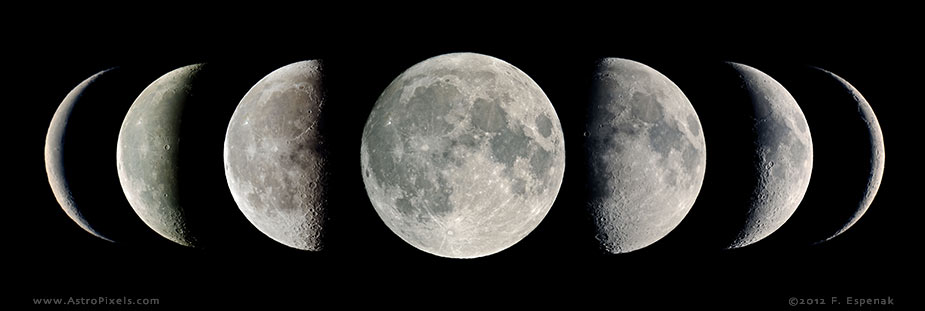
     The Israelite calendar is completely different. To start--the year does not have a set number of days. Only after the year is complete will the number of days be countable. There are 12 or 13 months in each year, depending on the year. Unlike the Gregorian Calendar, the leap years are not regular or perfectly predictable. The number of days in a month is also not set. We measure our months based on the moon. Now, most cultures originally based their months on the moon. [English Lesson: Our word "month" comes from "moonth", as did the word for month in many different cultures]. However, as time went on, the months were changed to be more rigid and predictable. Israelite time-measuring is more fluid than rigid--it follows the rhythms of the earth/Universe.


     For starters, the Israelite month begins and ends at the new moon. Once the new moon is spotted, the previous month ceases, and the new month begins. In the Israelite community, there is a bit of contention as to what moon actually begins the month. There are two viewpoints on this--one side believes the New Moon (being the dark moon--when no light is seen) is when the month beings. The other side believes when the moon comes back--a phenomenon known as "the Sliver Moon"--the new month begins. There are good arguments for both sides. I'm firmly on the New Moon side (also called the "conjunction").
[If you are interested in learning more about the Sliver vs. Conjunction argument, I highly suggest you check out 119 Ministries--they're pro-Conjunction, but they lay out the evidence for both sides fairly well.]

    The Israelite year begins in the spring. Our first month is called Aviv/Abib (also called Nisan), and usually starts sometime in March on the Gregorian calendar. Aviv is the month that opens up the year for a leap-month. The word Aviv means different things; it is the name of the first month; it means "spring", and it is also the word for a certain ripeness of barley--a spring-time ripeness. Green, full, but not yet fully dried.

Link
The month of Aviv can only begin if the barley is also aviv. If the barley is not yet aviv, spring has not begun, and the year is not over. Instead, another month is added to the year, making 13 months total, and the following month, when the barley is aviv, the new year begins. Philosophically, the year begins when the seasons "begin" again. Winter, all over the world, is associated with death. Spring, conversely, is associated with new life. Our calender fits this philosophy. The old year dies in the winter and is born in spring.

     Our days are, similarly, measured differently than the days of the Gregorian calendar. The Gregorian Calendar revolves around unchanging units of time; a second is such and such long, a minute is sixty seconds, sixty minutes in an hour, 24 hours in a day, and so on. Though nifty, this system is not entirely accurate to how the world actually works--it is too rigid--and that is why leap days and daylight savings are utilized to keep the days more or less the same.
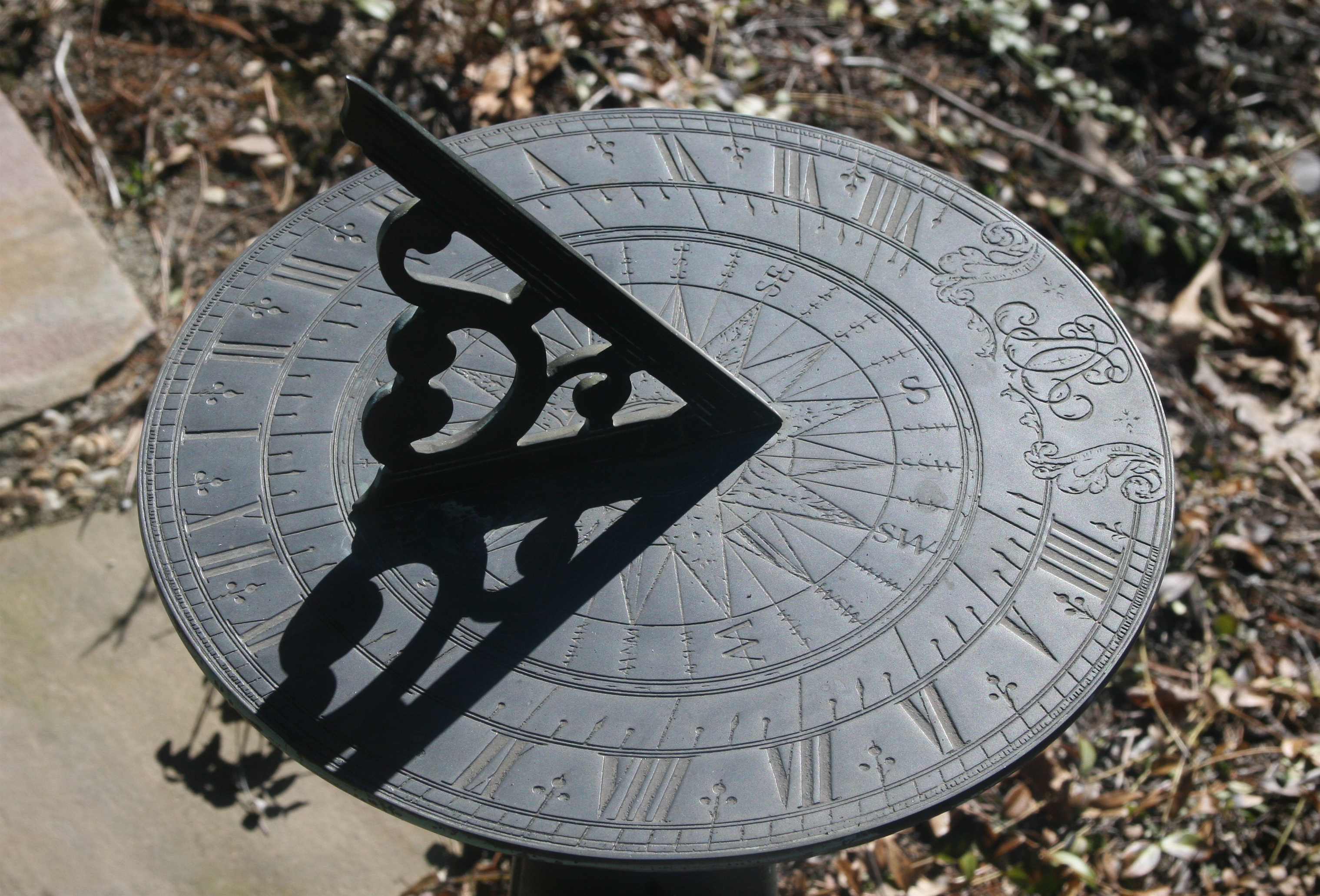
     The Israelite calendar is fluid; it flows around the changes of the seasons. As before stated, and as you probably are aware, a Gregorian day begins and ends at midnight. Israelite days, however, begin and end at sundown. Once the sun has set, the old day is done, and the new day has begun. Because of this system, daylight savings--jumping ahead or back in time--is not needed. The day follows the sunlight. In the winter, days begin earlier, as the sun sets earlier. In the summer, days end later, as the sun sets later. Our hours, accordingly, are different. They are not always the same length from day to day. Noon is when the sun is the highest, rather than when our clock says so, for example. It can be a little difficult to get used to, but once you get in the groove, it's easy.
Ya know, like how people used to use these suckers.
     These distinctions are important for a number of reasons, but, they are most important for the keeping of the holidays ("Holy-days", see?). Similarly to how the holidays of Christian America tend to occur on the same day each year (Christmas on the 25th of December, for instance...[but, why not Easter? Hrrrm, I suggest you look into that, dear reader]), Israelite holidays fall on the same day of the Israelite calendar each year. In order to celebrate properly, one must know the correct day upon which to celebrate.
     The trouble comes in when one is an American, working a job based on the Gregorian calendar, but religiously following the Israelite calendar, like I am. For example, "The Feast of Atonement", also known as "Yom Kippur", is one of the more rigid holidays. On this day, you must not drink any water or eat any food. You must do no manner of work at all. Anyone who violates this day will be "cut off" from Israel (link). In short, it is not a holiday to play around with. Last year, Atonement fell on a Gregorian weekend. It was very easy celebrate the holiday. This year, Atonement falls on a weekday, beginning on the sunset of October 2nd. Therefore, I will have to be absent from work on October 3rd. You can see where the problems arise.

     The holidays fall mostly into two clusters--the spring Feasts of Passover, Unleavened Bread, and First Fruits in the spring, Pentecost in the summer, and Trumpets, Atonement, and Tabernacles in the fall. Both the spring and the fall have 8-day celebrations (Unleavened Bread and Tabernacles, respectively). At the beginning and end of each of these 8-day celebrations are additional Sabbaths--days upon which no work must be done. Keeping track of the calendar is very important to avoid violating these Sabbaths.

Link

Upcoming, starting next week, are my favorite holidays--the fall feasts. I plan on writing a more in-depth post on each of the holidays as they come as well as how I celebrate them. However, an Overview is in order!

Feast of Trumpets/Yom Teruah
Kicking off the fall feasts is the loudest holiday of the Israelite year. We celebrate by blowing horns. All day. The horns typically blown by your average Israelite are called "shofars". They are made of a ram's horn. We don't currently own a shofar--we have one ordered and are hoping for it to arrive in time! If not, you'll see how we work around this on the day of. This year's Feast of Trumpets will begin this Tuesday night, the 23rd, at sundown, and continue until the sundown of the 24th.

Day of Atonement/Yom Kippur
Atonement, the solemnest day of the year, involves abstaining from food and water from sundown to sundown and meditating over/atoning for your sins. I'll be writing about how to make Atonement bearable once it rolls around. This year, it will begin on the sundown of October 2nd and end on October 3rd.

Feast of Tabernacles/Sukkot
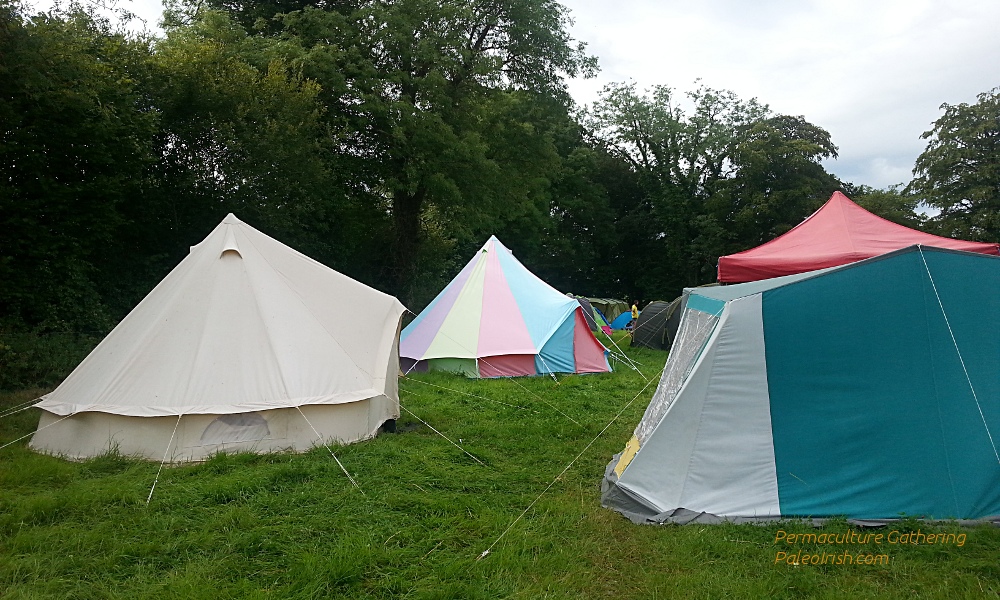
This is my, and many Israelites', favorite holiday. For the week of this feast, (October 7-15 this year), we all must "dwell" in tabernacles, or, tents! Because this is a longer holiday, Israelites often travel to meet in large groups for some or all of this feast. It is a celebration of the harvest, and there is feasting every night, branch-waving, dancing, and general celebration. Whereas Atonement is a solemn holiday, Sukkot is celebratory and happy.

Thanks for reading, and stay posted for the Fall Holiday posts!
Feast of Trumpets
Atonement
Feast of Tabernacles
Any questions? Leave a comment below!

Saturday, August 23, 2014

Being a Stranger in a Strange Land: How to Food [in South Korea]


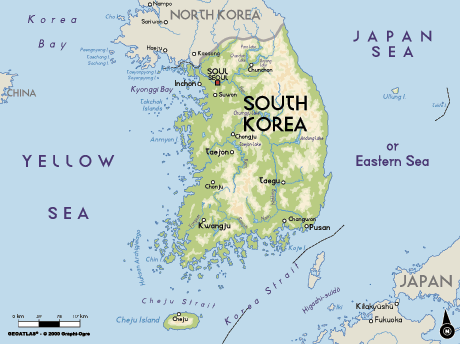
Today, we're going to talk about a lighter subject--how to be a good Israelite while being in another country. In the summer of 2012, Sven and I spent 7 weeks in South Korea. It was part of a study-abroad program offered by our university. The program worked like this; three weeks of teaching English to Korean university students followed by four weeks of taking classes. The teaching/learning load was not heavy--six hours of classes a day with Fridays off. So, naturally, a large part of the whole thing was experiencing the country and culture of South Korea.

Link
     I'd have to say that the most important thing to remember while being an Israelite abroad is that your religion is not something you leave at home. It sounds simple. However, when faced with "being a stranger in a strange land", the stress can make one more lax when it comes to things that are important at home.

     For us, food was, without a doubt, the most difficult aspect of our travel. At home, it is quite easy to avoid eating things we don't want to eat. In a foreign country, it becomes harder. As I wrote in an earlier post, unclean food additives are oftentimes found in the most unlikely of places. Being knowledgeable about the ingredients and being able to read the labels goes a long way to avoiding unclean foods. Obviously, the biggest challenge of travelling across the world is the language barrier.

     The first step to maintaining your way is to educate yourself. The second is to strap in for the long hall. We knew before heading out on our trip that it would be difficult; research told us that shellfish and pork are very popular meats in Korea, and that flavorings made with one or the other were often included in the most innocuous dishes. Nutrition labels might not contain all of the ingredients, and they'd probably be written in Hangul, which I could barely read at the time. We developed strategies to combat this--eat simple foods, avoid known problem foods, and call upon our resources (Korean friends) when in doubt. But, as they say, the battle plans only last until the first shot is fired. Things went quite differently than we had expected.

     The first problem we met with was poverty. Due to miscommunication and bad information, Sven and I found ourselves arrived in South Korea with only $100 to our names. We had been told that we would have our plane tickets refunded by the program when we arrived--about $3,000 total. We'd been counting on that money to see us through the seven weeks. Upon our arrival, we discovered we would not be paid until our teaching was done. I had brought $100 as a small safety net for any emergency we might meet. After we paid our bus fare to travel the 2 hours it took to go from the airport to Dankook University, we had $74.

Less than this. For two people. For three weeks. (Link)
    Now, the school provided one meal a day for the people in its program. We had been told it would be our choice of breakfast, lunch, or dinner, and had planned on mainly utilizing this offer for lunches. This information also proved to be false. We would be given breakfast every day only. Neither Sven nor I are big breakfast eaters. This was a setback. It became more of a setback when we discovered what a typical Korean breakfast consists of. Rice is always served, as is kimchi (pickled spicy cabbage, usually, though the breakfast kimchi was made with radishes). The only beverage offered was water. Sides included seaweed, beef soup, chicken nuggets, potato salad, bean sprout salad, and sauteed vegetables. Not too bad. However, sides also included squid soup, shrimp soup, pork nuggets, sauteed vegetables with "seafood" sausage, and oyster soup. There was a set meal every day, and it was not labeled. We had more than a few mishaps.

For example, this soup--delicious meal, or deadly poison??
    For example, the above soup was bought from the small "restaurant" in the dorm--cheap alternates to the cafeteria. In the beginning, we often bought our dinners there--things like 오므라이스 (omurice=omelet+rice) and 김밥 (kimbap=seaweed+rice, a sushi-like food). The soup above was chosen randomly from the menu. I ate a bite or so, and thought it was alright. Sven took one bite and said, "Something is wrong with this". Upon stirring, we found clams (with shell!) in the bottom of the bowl. The food was returned, an explanation (mimed for the cooks) was given, and we went to bed hungry that night.

     We quickly developed a rapport with the food staff--I often used the phrases, "돼지 고기 있어요?" "새우 고기 있어요?" (Literally, and badly, "Is there pork meat?" "Is there shrimp meat?"). And some of the nicer ones would warn us away from dishes containing these things by shaking their heads at breakfast or by making the "X" sign with their fore-arms, indicating we shouldn't eat it. Some of our new friends in the program would help as well when a dish was more mysterious, "I think these are the pork nuggets", etc etc. However, we could not always depend on the goodheartedness of our fellow men. We went hungry on more than one occasion due to the language barrier. One memorable time included a dinner of kimbap we fed to a local cat when a new-to-us cook included ham after assuring us there was none.

To be fair, ham is usually included in this dish. (Link for pic)
     The "going hungry" demonstrates the second part of Travelling While Israelite; we had to stick to our guns. We only had money for one meal a day. We would share whatever was bought between ourselves to save money. If the meal had something unclean in it, it had to be thrown away, and we couldn't afford to buy something else. Now, I'm not going to try to say something like, "It really didn't matter; we were happy with our Holiness". It mattered. It stunk. We were perpetually hungry. We both lost a lot of weight in the first few weeks.
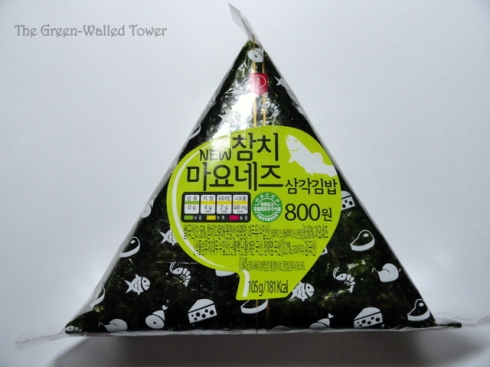
Praise the Lord for THESE (link)
    To try to avoid the whole "starvation" things, once we found a food that was reliably clean, we stuck to it. Pictured above is a "Samgak kimbap"--a triangular rice cake. They're about the size of a person's palm. We were told that the ingredients of these could be told by the color of their label. Red meant kimchi-filled, for example. We latched onto the tuna and mayonnaise ones. They tasted just like tuna sandwiches. Now, remember, we were poor. We would split one of these for lunch. One. For two of us. That boiled down to about three bites each. Three and a half bites if we nibbled rather than chomped.

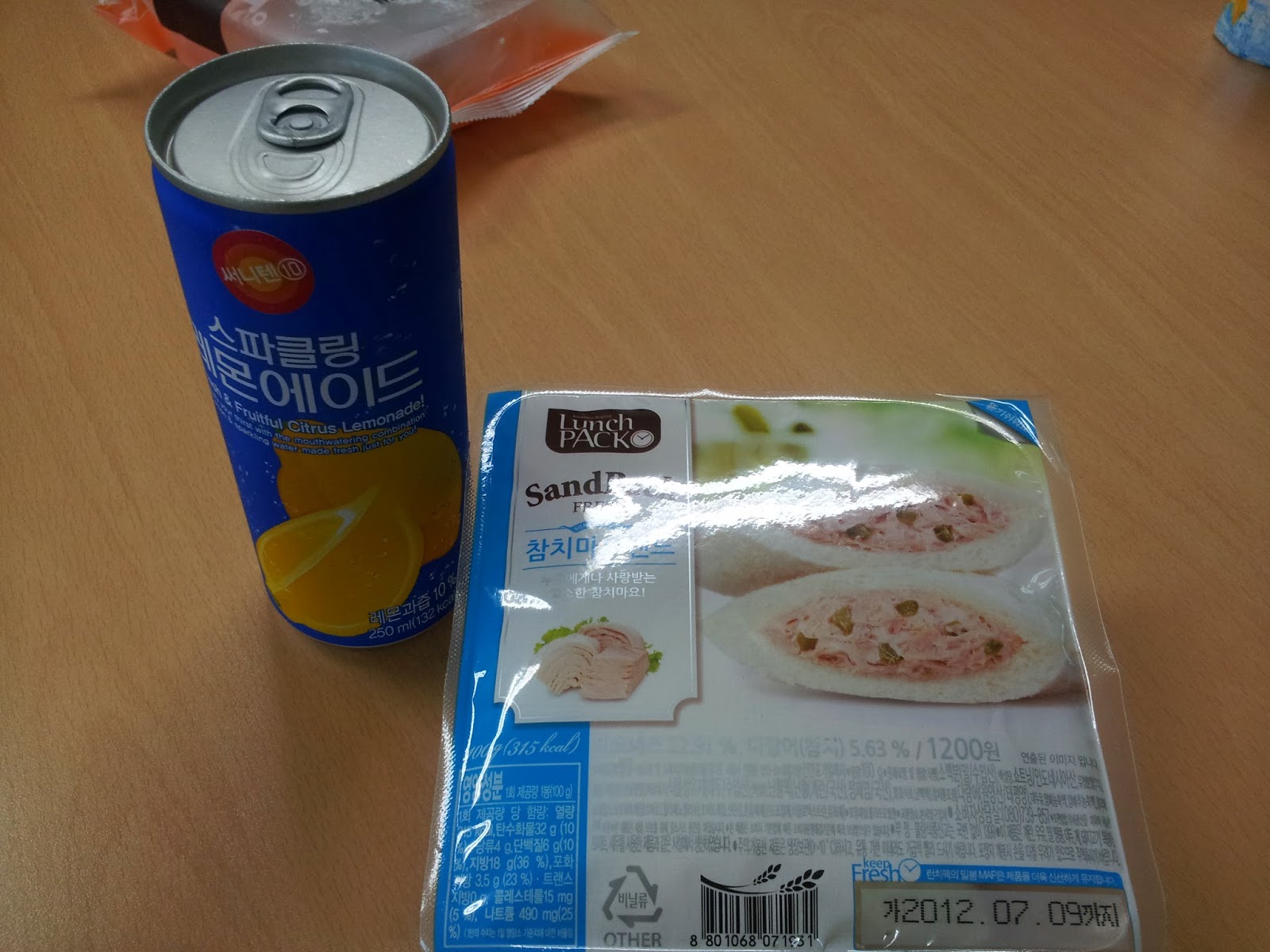
Did I mention tuna sandwiches? This was dinner one night. The best part was that each package contained TWO sandwiches.
    Luckily for us, the drinks were very cheap, and each floor had water spigots. If we couldn't eat, we'd share our juice, tighten our belts, and do our best to fill up with water. Happily for us and our health, the starving time did not last forever. A beautiful, wonderful, patient, savior friend of mine came to the rescue. She led us to a bank where I could withdraw from my American account and receive Korean Won! Still, we spent sparingly--it was my college fund I was pulling from.

    After the three weeks, we received our plane refunds. Finally, we could travel, shop, and eat!
Pictured: Over 1,000,000 Korean Won, also, the face of Happiness
     At first, we were very cautious. We ate only at places where the ingredients were already-known and guaranteed. 
Shabu-Shabu, for example, provides choice of spicy, seafood, or vegetable broth and beef, chicken, pork, seafood, or special beef for the meal.

The best fried chicken I have ever eaten in my life. From a small hole-in the wall Chicken-and-Beer place (possibly called Bodram? Or advertising a place called Bodram). Very common food combo in S. Korea.
    Things were definitely looking up. Our change of fortune did not guarantee perfect experience, however. For example, once when ordering bulgogi ("Fire meat"--a tasty teriyaki-like beef meal), we were instead presented with the "more special" bulgogi-plus-squid dish. I am ashamed to say, but our perseverance did not win out that day. We picked out the squid and my Korean friend who was along with us happily ate it while we ate the beef. If given the choice to do that over, I would have caused a stink and asked for plain old bulgogi. Oh well.
     Part of the experience that eventually allowed for more branching out was more education. I was taking beginner's Korean (three hours a day!), and was learning more and more how to ask questions and get information. It became easier to peruse menus and find edible options. We still relied on the help of others--our first night in the Chicken-and-Beer place, we randomly ordered a stir fry dish. Sensing our general lost-puppy American-ness, our kind server showed us a picture of that dish on his phone. Stuttering in my still-developing Korean, I asked for, "no no, not that. Chicken. Just chicken." and lo and behold, we were given the glorious meal pictured above. We continued to eat at that restaurant at least once a week, always trying to talk a little more each time to that server. The same went for the lady who was the proprietor of the Shabu Shabu place.
    With more knowledge and experience, finding food became almost easy. As the days went by, we experienced less and less culinary hiccups. When we traveled around, I carried a notebook with me where I had written helpful phrases in Korean, as well as the Korean names for typical food items.  As we became more experienced, the notebook became more full. By the time we left, we were comfortable ordering food, knew our way around a menu, and were quite well-fed. 

Though scary at first, being a stranger in a strange land was ultimately not that terrible. There were ups and downs. We were sometimes hungry and miserable, but we learned, eventually, How to Food in a Foreign Place.
Lessons Learned:
1) Research beforehand
2) Stick to your guns
3) Continue learning
4) Ask others for help