Saturday, November 29, 2014

Sarah, Wife of Abraham: Matriarch?


Hello again!
It's been a bit of a break, but I'm happy to be back, and I hope you are, too. Today marks the kick-off of a new series, Women of the Bible. Now, this is a rather typical writing topic, especially for a young, married, religious woman. However, I hope to bring something new to the table. For starters, I'll be writing about these ladies from an Israelite standpoint, which will add another layer to what we already know. Also, unlike most writings I've read on the topic, I don't intend to sugarcoat, ignore, or minimize things in the name of having a "role model". With that being said, let's get into Sarah! [Disclaimer: It's about to get a little sarcastic and a little crude. There's a lot of sexual shenanigans going on in the story of Sarah, and I cover and critique it in this article.]


     Sarah is a bit of an interesting lady. She's commonly cited as the Matriarch of the Christian/Jewish/Israelite religion(s) because of her relationship to Abraham. Now, this is a theme we're going to run into a lot with this Bible women series; most of the women are only important because of their relationship to someone else rather than a skill or trait they themselves possess. I believe Sarah fits into this category.

     For her full story, check out Genesis 11:29-24. I'm not interested in a huge summary, but we can paint it in broad strokes. In no particular order: Sarah was originally named Sarai, and she was married to a fellow named Abram, who was also her brother (more on that later). Abram was picked by YHWH to be the progenitor of his people, the future Israelites. Sarah, however, was barren. Along their travels, YHWH gave Sarah and Abraham their new names. Abraham gave Sarah to two different men as a sex slave. He got her back. They continued to not have children. Sarah gave Abraham her servant as a sex slave. Abraham had a kid with said slave. Sarah got jealous and had the servant and her kid banished. Then, after laughing at God's promise and lying about it, she had a son, Isaac. Abraham tried to sacrifice Isaac, but was stopped by God. She lived to be 127 and died. Well hmmm. Her life sounds a lot more exciting when you put it like that.
   
     For the record, I've never liked Sarah. I never saw what was so good about her or what example she was supposed to be for us. She's a brother-marrying, willing-to-commit-adultery-at-the-behest-of-said-brother, jealous, manipulative, spiteful and faithless woman. More than an "example", I believe her life is an anti-example. An example of how things can go wrong. Let's dive into it.

Incest
     We'll start with the incest accusations, since I'm sure that's the most surprising thing in the above list. Alright, so, Abraham was the son of a man named Terah (Genesis 11:27). A few verses later, Sarai is introduced simply as Abram's wife (11:31). However, when you read the whole story close enough, something interesting emerges. As mentioned above, Abraham gave Sarah up to two different men during their lives together. Both men were rules--a Pharaoh and a King, respectively--and both times, Abraham was afraid he would be killed if he did not give Sarah to them. Both times, to avoid inciting these men, Sarah was identified as Abraham's sister. Now, when I was a Christian child, I was always told this was a clever ruse on the part of Abraham. However, it's an odd lie to tell twice. Probably because it wasn't a lie at all. Sarah was Abraham's sister. In Genesis 20, Abraham was pulling ye olde bait-and-switch again with Sarah and the King Abimelech. After finding out the truth, Abimelech confronts Abraham. Abraham defends himself in 20:11-12 (emphasis mine), "Because I thought, surely the fear of God is not in this place; and they will slay me for my wife's sake. And yet, indeed she is my sister; she is the daughter of my father, but not the daughter of my mother; and she became my wife." Straight from the horse's mouth; the two share a father; therefore, they are half siblings.
     From an Israelite standpoint, that relationship is wrong. The Law clearly states that half-sibling incest is a no-no. From Leviticus 18:9, "The nakedness of thy sister, the daughter of thy father, or daughter of thy mother, whether she be born at home, or born abroad, even  their nakedness thou shalt not uncover." No wiggle room there. The relationship between Sarah and Abraham was not a good one. The only saving grace they have is that the Law had not been laid down yet. If the two had been born at a later date, they would have been "cast out" as "abominations"--cut off from their people (Lev. 28-29).

Analysis
     Though they can hardly be blamed for doing something they didn't know was wrong, the Law is an eternal thing. A punishment would not be right, but at the same time, I think the Law has de jure as well as de facto punishments. I think a lot of the problems between Sarah and Abraham started with their sibling relationship. It's a sort of built-in punishment of sorts. More below.


"Here ya go, one bonafide sister, as promised."

Sex Slavery/"Why Women Shouldn't Do Everything Their Husbands Say"
     Second accusation; Abraham gave Sarah up to sex slavery on two different accounts. The first time was in Egypt. Abraham had moved his household south due to a famine (Gen. 12:10). As they travel, Abraham starts to get paranoid. He realizes Sarah is beautiful, and he fears the Egyptians will kill him in order to possess Sarah (12:11-12). So, he begs Sarah to say she is his sister rather than his wife in order to save him. Sarah complies (12:13). They settle down, and word of Sarah's beauty spreads. Soon enough, the servants of Pharaoh come to fetch her. In exchange, Pharaoh gives Abraham "sheep, oxen, he asses, menservants, maidservants, she asses, and camels" (12:16). Luckily for both Sarah and Abraham, God struck Pharaoh's house with plagues until he realized something was up and discovered Sarah was Abraham's wife. Sarah was returned, and she and Abraham were kicked out of Egypt (12:17-20).
    The second time was some years later. Apparently, Sarah was still a foxy lady, and Abimelech, the king of Gerar, took Sarah. Abraham, in the meanwhile, was sitting somewhere in the background, assuring everyone that she was his sister (Gen. 20:2). Luckily, once again, God steps in, and gives Abimelech a frightening dream that reveals the truth before Abimelech actually had sex with her (20:4-6). Abimelech returns Sarah to Abraham and gives Abraham some presents.
If you look really close, you can see the familial resemblance.
Analysis
     Revisiting what I said above about de facto punishment, let's look at this. Not once, but twice, Abraham gives Sarah to another man. Why? To save his own skin. Not even to save his own skin, actually, but because he was afraid for his own skin.  To save himself, he was willing to give up his wife (/sister) to adultery, rape, and whatever else these kings thought up. I bring up their double relationship again for a reason. Not only did he have responsibility to Sarah as his wife; she was his sister, too. What if it had gone off? He gave her to Pharaoh and got goods in exchange, went home, and Terah asks, "uh, hey, where's Sarah?" "Uh, well. You know. I gave her to the Pharaoh. To be his concubine. He gave me some really cool stuff in exchange, though! Check out them camels!" ........let that thought stew for a minute. He did not protest, did not fight, and did not try to find another way. Those are not the actions of a holy man; they are the actions of a weak and cowardly man. He was not being a good husband or brother.
     But! We're not here to learn about Abraham; we're here to learn about Sarah! Yes. Let's look at this again. Abraham asks her to claim sisterhood to him in both Egypt and Gerar. He explains to her the reason, "I don't want to die, so say you're my sister so (they'll just rape you) and leave me alone". And she went along with it. "But!" you may cry, "God had their backs! It worked out alright in the end, didn't it?!". Yeah, He had their backs--because He'd previously promised them their future. He's not going to cut out of the bargain because Abraham is a doofus. And, the way He dealt with it--plagues, nightmares, scoldings--shows that what Abraham and Sarah did was not the right thing. Lying and tricksy adultery is not right. Sarah had the chance to stop it. She could have said, at any point, that she was Abraham's wife, and God would have had their backs. Instead, she kept quiet, and because of her, plagues and curses were visited on two houses of duped rulers.
    Back to the de facto punishment line of thinking. Consider: would Abraham ever have pulled that "sister" card if Sarah had not been, in fact, his sister? I don't think so. He said it himself, "But she IS my sister" by way to explain away his lying. Their one mistake led into other mistakes. The lesson to learn here, besides not marrying your sibling, is that doing the right thing is everyone's responsibility. Abraham was wrong, and because Sarah did what he said, she experienced some unpleasantness (I doubt she was cheerful and excited to be a concubine), and two houses were cursed. Not to mention, in the future, their son, Isaac, pulls the same trick with his wife! (Gen 26:) Lead by example, I guess.


No Babies=More Adultery+Jealousy
    This next section explores the side of Sarah I like to call "the spiteful/faithless harpy". One of the problems plaguing (heh...."plaguing"....ahem) Sarah and Abraham's relationship from the get-go was Sarah's barren womb (Gen. 11:30). Considering the close relationship of Sarah and Abraham, it's no wonder they were having troubles having a kid (de facto punishment, again). When Abraham was told by God that he would be the father of a huge people, things started to sour in the S&A household. Sarah felt guilty for not being able to give Abraham a kid. Rather than waiting, trusting, working on the whole "please-stop-giving-me-to-rulers" thing, Sarah decides the best course of action is to have Abraham sleep with her slave, Hagar, (Gen. 16:2) and poach any resulting kids for her own.
     Abraham, being stupid (or maybe thinking he owes his wife on the whole "make-me-sleep-with-someone-else" bit), agrees. He sleeps with Hagar, and Hagar gets pregnant. Sarah then goes all Jerry Springer on Hagar and chases her out of the encampment. Abraham does not step in (Gen. 16:6). However, Hagar meets with an angel who tells her to go back and raise her son. She is told ,"And he will be a wild man; his hand will be against every man, and every man's hand against him...." (Gen. 16:12). Not the best news for an expectant mother, but in this situation, who could grow up as anything else? Later on, when Sarah gives birth to Isaac, she catches Ishmael, Hagar's son, "mocking" Isaac. (Gen. 21:9). Sarah appeals to Abraham about the matter, and Hagar and Ishmael are given a bottle of water and some bread and kicked out into the wilderness (21:14). Hagar wanders, lost, until the water runs out. She leaves Ishmael under a bush because she can't bear to see him die, but, at the last minute, God shows up, tells her where to find a well, and looks after Ishmael. He grows up to become an archer and marry an Egyptian (21:15-21).
Ishmael - Getty Images
And that's the LAST time you make fun of your brother!

Analysis
     This is another part of the story that has always rubbed me the wrong way. Neither Sarah nor Abraham did what was right. If Abraham had been faithful (as in the religious way. Obviously, neither one of them is maritally faithful), he would have refused to sleep with Hagar because he believed God's promise. If Sarah had been faithful, she never would have suggested such a twisted arrangement to begin with. As in the previous stories, we see that nothing good comes out of doing wrong. Sarah's actions lead to jealousy, manipulation, and attempted murder. She had no idea God would protect Hagar and Ishmael. She didn't care. They would have died in the desert for her pettiness if God had not stepped in. Abraham suffers as well. He sees Ishmael as his son, but he listens to his wife and sends him away (Granted, God also told him it would be okay), but he nonetheless suffers. He never gets to see his son again.
     Looking at long-term consequences, many people believe Ishmael to be the progenitor of the Muslim people and ancestor of Muhammad. He only existed thanks to Sarah's fecklessness. So, who is responsible for the fighting in the middle east, as well as centuries of strife and bloodshed? Sarah.
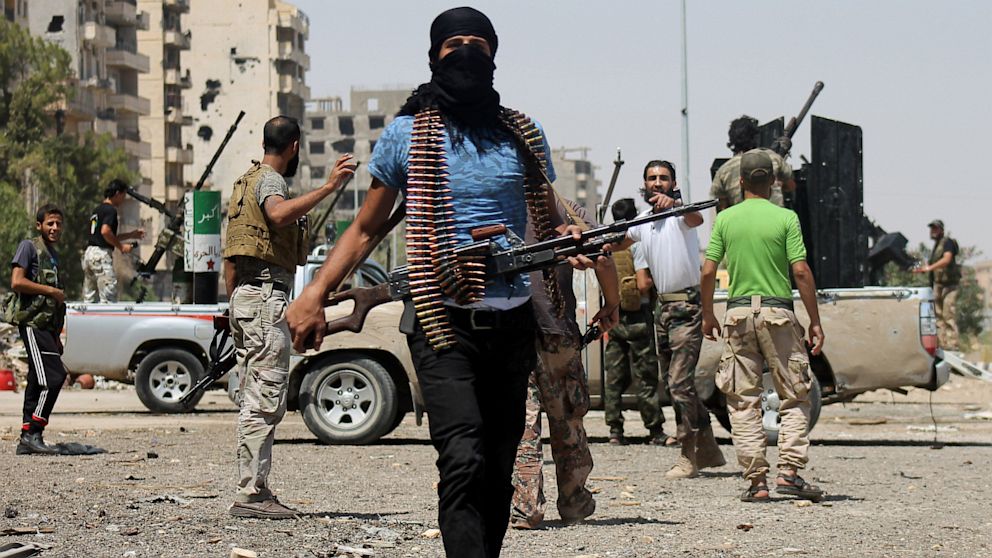
Thanks, Sarah!

Further Faithlessness: Laugh and Lie
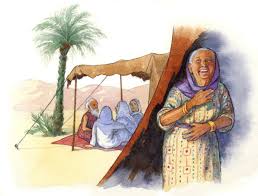
    We're drawing near to the end of our tale. Abraham and Sarah live to a ripe old age of 100 or so, and Sarah still has not had a child. The couple is visited by a mysterious trio who tell Abraham that he and Sarah will be parents shortly. Sarah, who is sitting in the tent, laughs. Gen. 18:13-15 holds the following exchange,

"And the Lord said unto Abraham, 'Wherefore did Sarah laugh, saying, Shall I of a surety bear a child, which am old? Is any thing too hard for the Lord? At the time appointed I will return unto thee, according to the time of life, and Sarah shall have a son.' Then Sarah denied, saying, 'I laughed not'; for she was afraid. And he said, 'Nay; but thou didst laugh'."    

     Though Sarah lived her life following what God told Abraham, moving from point A to B, and though she was saved on two occasions by His intercession, she does not believe Him when he re-gives His promise. When confronted, she lies about it. Not really surprising, considering her track record.

Analysis  
     There's not much to say about this one. It doesn't really connect to others except for the common thread of faithlessness. It does show that Sarah, at least, did not learn from her experiences. She had many decades to realize that God wouldn't let her family down not matter what, but she did not learn that lesson.

Summary
Sarah is definitely an important figure in the Bible and to our history. However, she is not important for any positive qualities she may have possessed. From the beginning of her story to the end, all she makes is mistakes. It's hard to find one good thing she did. She married her brother, was willing to trick others into adultery, invited her husband to commit adultery, abused her husband's baby-mama, attempted to have said baby-mama and baby (though, to be fair, he was older than 13 at the time) exiled to their doom, and, after all that, did not trust that God would pull through for her. Yes, she had faith in her husband, but that lead her to deceiving and seducing. She is, by definition, our matriarch, but she is not a role model by any stretch of the term. The lessons to learn, I suppose, are these. A) The story of Abraham and Sarah is probably not what you grew up learning; nevertheless, it is important. B) Keep a hold of your sexuality. If it gets out of control, it can and will cause huge and long-lasting problems. C) Keep faith in God; he won't let you down, even if you screw up big time.

Friday, October 31, 2014

Announcement: Upcoming Series, Women of the Bible: Facts and Opinions

(Link)

I'm happy to announce the next series to come from this blog! I'll be writing on the more and lesser-known women from the Bible from an Israelite perspective. I'll cover truths and fictions, impact on Israelitism, and what their stories mean today (for both men and women); for many of the stories, I'll be focusing on marriage dynamics. Expect factual learning mixed with critique, analysis, and some snarkiness (no general milquetoast writings from me, you can be assured). Below, in no particular order, you'll find a list of the women I'm planning to cover. The list will be updated as things develop.

Old Testament
Sarah/Hagar
Zipporah
Leah/Rachel
Ruth/Naomi
Deborah/Jael
Lot's wife/daughters
Tamar
Rahab
Hannah
Esther
Jezebel
New Testament (Undecided here, too. I'm not as well-versed in these ladies and their doings)
Mary/Martha
Mary
Salome/her mom


Sunday, October 26, 2014

Update: November

Well, things have been getting rather busy around here in the last few weeks. I just finished up my series on the fall holidays, and it may be a small bit before a new post comes out. Mostly because I'm not sure where to go next (ha). I'm expecting to write some posts about the Song of Solomon, maybe one on skirts/dressing norms, and a few general-type posts as they come to mind. If you'd like to see a post on anything in particular/if you have any questions you'd like answered, please, leave a comment on this post, and I'll do my best!

Celebrating Sukkot

[Note: Sorry this post is so late in coming! I've had a busy couple of weeks. I really wanted to get this out in the weekend of Sukkot, but, you know what they say about, "the best-laid plans of mice and men"....Anyhow, I hope you enjoy the post!]
Following along in our "Fall Holiday" series, we have our last holiday post for the year; Sukkot, also called the Feast of Tabernacles. Sukkot is the last Israelite holiday on the calendar--(some of us celebrate Hanukkah, but it's not a mandatory holiday like those of Leviticus 23)--and, speaking honestly, Sukkot's the most fun. Sukkot has the least restrictions and most pro-party rules of any Israelite holiday.

Bigger Sukkot gatherings may look something like this (Link)

Let's take a look at what the Bible has to say (Lev 23:33-44, removing a few for brevity and clarity, marked with "..."):

     "And the Lord spake unto Moses, saying, Speak unto the children of Israel, saying, The fifteenth day of this seventh month shall be the feast of tabernacles for seven days unto the Lord. On the first day shall be an holy convocation: ye shall do no servile work therein....on the eighth day shall be an holy convocation unto you...it is a solemn assembly; and ye shall do no servile work therein....Beside the sabbaths of the Lord, and beside your gifts, and beside all your vows, and beside all your freewill offerings, which ye give unto the Lord.Also in the fifteenth day of the seventh month, when ye have gathered in the fruit of the land, ye shall keep a feast unto the Lord seven days: on the first day shall be a sabbath, and on the eighth day shall be a sabbath. And ye shall take you on the first day the boughs of goodly trees, branches of palm trees, and the boughs of thick trees, and willows of the brook; and ye shall rejoice before the Lord your God seven days. And ye shall keep it a feast unto the Lord seven days in the year. It shall be a statute for ever in your generations: ye shall celebrate it in the seventh month.Ye shall dwell in booths seven days; all that are Israelites born shall dwell in booths: That your generations may know that I made the children of Israel to dwell in booths, when I brought them out of the land of Egypt: I am the Lord your God. And Moses declared unto the children of Israel the feasts of the Lord."

    To summarize, from day 15 of the seventh month for seven days, the Feast of Tabernacles is to be celebrated. Starting on the 15th, we must "dwell" in "booths" for seven days. The 8th day is an extra Sabbath, and so is the first day. We are supposed to feast, and use branches to "rejoice before the Lord". It's a happy holiday. It's a harvest holiday. 

    The booths rule comes to commemorate the 40 years the Israelites spent wandering in the desert after they were freed from Egypt. In that way, it's both happy and solemn. After all, the Israelites were only in the desert thanks to their cowardice and fecklessness (see Numbers 32 for the whole story). However, the remembrance is also happy; after all, God still protected the Israelites and took care of them during this time, and they were headed to the Promised Land (albeit for the second time...). 

     We celebrate Sukkot by doing exactly what is outlined above. I took off of work for the first and eighth days (being Wednesday, 10/8 and Wednesday, 10/15, respectively). Sven and I set up our tent in our backyard and slept there every night. We feasted and celebrated during the days (waving branches, dancing, singing, etc etc.). In addition, we got to have a little extra fun. My sister, who attends the University of Kansas, came out to stay with us from Friday to Monday. For us, this meant extra fun; for her, it meant fulfillment of the "feasting" part as well as the "convocation" part (college students poorness and, surprisingly enough, it's hard to find other Israelites where she is).

Pictured: Feasting, Family, and general Festivity

     There were good bits and bad bits of this holiday, as there typically are in any 7-day span of time. One of the worst things was the weather. Where we live, it tends to be very, very, very dry. Drought dry. Since it's so dry and flat, it also tends to be warm. We (foolishly) counted on this when making our initial Sukkot plans. Our yard it flat, and there's a  nice secluded corner of the backyard where the ground is shielded on two sides by the house. This is where we first set up our tent. It was shielded from the wind and (rather annoying) streetlights, as well as from any prying eyes there might be. This worked out well. The first night. It was balmy; the full moon lit up the yard with its gentle glow. There was a slight breeze. We packed our tent with a sleeping bag and two quilts, and we were as toasty as bugs in rugs. The second night, the storms hit. Unfortunately for us, the spot we'd picked for our tent also happens to be the only spot in our yard that floods when it rains. That first rainy night, we spent about an hour debating; should we move the tent? Was it raining hard enough? Could we somehow divert the water? What would we do if the tent flooded? And, gosh darn, wasn't it hard to talk over all this thunder? (We were in the tent at the time) When the storm finally broke (for about an hour, around midnight) we moved our bedding into the back of our (covered) truck, and pulled the truck into the driveway. We slept in the truck that night and moved the tent the next day. Lesson learned; plan for all weather, not just the weather you typically have.

Like this. But at night. And windy. Very windy. (link)

     After that, the weather continued to be terrible. Windy, rainy, and dropping into the (windy and rainy) forties at night. My sister, who did not have a tent, slept in the truck while she was here, but we were in the tent. The wind and water pelting against a rain fly can be surprisingly loud. Needless to say, I showed up to my job a little sleepy and frazzled more than once during the week. Thankfully, we did not have another flooding problem, though we were worried about the wind carrying the tent away on the last night, so we set it up in our basement and slept down there. This is my fourth Sukkot, and, I have to say, the weather has been the worst. My first Sukkot, the temperatures were freezing, and Sven and I were sleeping in my truck (read: "metal tin can that acts as a refrigerator in cold temps), but we wore (really) warm clothes, swaddled ourselves in (really) tick  and it was okay. Last year was simply gorgeous; we went out-of-state to visit some Israelite friends/relatives, and it was maybe 60 degrees each night. This time was just bad. However, the good bits were more than good enough to outweigh the bad.
Pictured: A bad place to set up a tent.

     For one, though I don't like to brag (cough cough), Sven and I are really good cooks. For this week, we have an obligation to pull out all the stops and cook delicious, filling, several course meals every night (that's what we take it to mean, anyway. Let's put the "feast" into "Feastday" and all that....)
Tasty and special Sukkot Salmon

 All-in-all, it was a great time. People sometimes ask, "Don't you miss Christmas/Easter/Halloween?", and the answer is no. For starters, my family was never huge on Easter/Halloween, and my dad very often pointed out the pagan nature of Christmas. The holidays I celebrate now have more meaning, are actually a part of my religion, and they're just better. I'd trade one day of presents for a week of camping, feasting, and hanging out with family any day. In addition to all this, they're fun in a new way because they're something I've done most with myself or with Sven from the very beginning. We get to celebrate our way. We don't have someone else telling us how to do or what to do. We look at the Bible, make sure we do what it says, and we can add our own bits on the way. For example, Sukkot is a time for board/card/etc games for us. I'm not exactly sure why. We don't love board games. We don't really play them normally, but when we get to be with family, it just seems fitting. So, when my sister was here, we played several nights' worth of paper telephone and the forehead-guess-who-I-am game. Another thing we decided was certain dishes to be cooked by our family every Sukkot in the future. One of which being 호떡 ("Hottoek", a type of Korean snack I'm sure I filled you in on in my Korean food post). We finally found a recipe online, and we were able to make them. The hot, gooey, sweet treats seem like a perfect fit for a fall holiday. So, we decided from hereafter, we shall always make 호떡 on the first day of Sukkot.
Pictured: Pure Happiness
To finish off this post; what should you take away? 1) When camping in the fall, always keep tabs on the weather forecast and plan accordingly. 2) Don't let small troubles get in the way of doing the right thing/having fun. 3) If you believe in it, read your Bible. Read it closely. There's more there than what meets the eye, and it can open up a whole new world for you. Happy fall!


Wednesday, October 8, 2014

A Guide to Yom Kippur: The Day of Atonement


The Day of Atonement is the most serious holiday in the Israelite calendar. Though it only lasts for one day, it is the most restrictive and strict.

The requirements are as follows (From Leviticus 23:26-32, KJV):
And the Lord spake unto Moses, saying, Also on the tenth day of this seventh month there shall be a day of atonement: it shall be an holy convocation unto you; and ye shall afflict your souls, and offer an offering made by fire unto the Lord. And ye shall do no work in that same day: for it is a day of atonement, to make an atonement for you before the Lord your God. For whatsoever soul it be that shall not be afflicted in that same day, he shall be cut off from among his people. And whatsoever soul it be that doeth any work in that same day, the same soul will I destroy from among his people.Ye shall do no manner of work: it shall be a statute for ever throughout your generations in all your dwellings. It shall be unto you a sabbath of rest, and ye shall afflict your souls: in the ninth day of the month at even, from even unto even, shall ye celebrate your sabbath.

     As shown by the "cut off from your people" and "destroy your soul" threats, this is not a holiday to mess around with. To break it all down,
1) It is a holy convocation--convocation meaning "meeting"; Israelites should be with other Israelites on this day.
2) Make an offering of fire--offerings are to be made at the Temple by Levites--no Levites+no Temple=no offering. Also, sin offerings were made moot by Yeshua.
3) Do no manner work--on other holidays and normal Sabbaths, the language is different. "No servile work" is the phrase used; most people take this to mean one's everyday job (work you're paid for), and household chores, like cleaning. The day of atonement is more serious; no work at all.
4) Make atonement--dedicate time to praying, reflecting, and figuring out how to improve.
5) Afflict yourself--there's a little argument on this, I think, but after a sermon some years ago, I take it to mean complete fasting during the 24 hour period. No food and no water.

   We celebrated (if that's the right word for it) the Day of Atonement last Friday, October 3rd. The holiday technically started the night before at 7:24. This year marked the third Day of Atonement I've celebrated, and the second I've celebrated with Sven. Last year, it fell on a weekend, so I didn't have any work schedule to work around. This year, I asked off of work ahead of time and also cleared up my schedule Thursday evening so we could properly prepare.
     Preparations differ between families and groups. Some believe that nothing extra should be done in advance; no extra eating, drinking, or cleaning. Sven and I fall on the other end of the spectrum. Thursday night, we sped through the house, cleaning up anything that would annoy or impede us the following day. Between cleaning, we drank copious amounts of water and cooked large portions of a very balanced and filling meal.

Shown: What we Consume on the Day of Atonement
     Our philosophy is this; no matter how much eating and drinking you do in preparation of the Day of Atonement, going without any food or water for 24 stinks. It stinks no matter what. The soul afflicting is just going to happen if you don't feed or hydrate yourself. However, there are levels of stinkage one can experience. We'd rather not be spending the whole day whining, "I'm so hungry. My mouth is so dry. Oh my gosh, etc etc" when we are supposed to be praying, atoning, and generally not be distracted by growling tummies. The other reason for it is this: going without water makes one lightheaded. Though we aren't running about, lifting heavy things, or elsewise working on that day, we do stand up and move around. Even with water gorging the night before, headrushes, dizziness, and general headachey-ness is a given. Last year, when I was living alone, towards the end of the day, I stood up from my bed to walk to my living room and collapsed in my hallway. It wasn't anything serious, but I was very lucky I fell onto a floor rather than onto some furniture. To sum up: We definitely suffer, and we don't want the holiday to be dangerous.

    Honestly, what makes the Atonement hard is the tricky nit-noi things. Teeth cannot brushed without water. Medicine is something you eat. So planning ahead is a must as far as getting what needs to be done completed before the sun goes down. If the preparations are completed properly, everything else goes smoothly.

     As far as this year is concerned, our day was rather relaxed. Our preparations the day before paid off. We slept in on Friday, did our atoning after waking, and spent the day quietly; reading the Bible, chatting, and watching appropriate Youtube videos. I wasn't really bothered much by the fasting aspect, though I was definitely ready for a glass of water when the sun went down on Friday. Sven was more bothered (probably because he's a bigger person?), but, all in all, we came out of the holiday feeling refreshed and clean, and that's really the whole point.

Expect a post (or posts) soon concerning Sukkot, the Feast of Tabernacles! It began last night at sundown, and though it hasn't been long, we've already tried some fun new recipes (feasting is a must during this holiday) and we have some exciting things planned for the week ahead. Happy fall feasts, everyone!

Saturday, September 27, 2014

Feast of Trumpets, Yom Teruah: Fall Holidays Pt. II

Last week, I wrote an introduction to Israelite time-keeping and the fall holidays.
This Wednesday, the 23rd, we celebrated the Feast of Trumpets.

As feasts go, Trumpets is pretty low-impact.

From Leviticus 23:23-25:
The Lord said to Moses, “Say to the Israelites: ‘On the first day of the seventh month you are to have a day of Sabbath rest, a sacred assembly commemorated with trumpet blasts. Do no regular work...’”

On that day, we read the story of Joshua and Jericho, as trumpets play largely into the tale. We took it easy at home--we didn't clean or lift anything heavy. And, as our shofar arrived in the mail that day, we spend about a half hour figuring out how to make it sound like anything other than a dying rabbit.
This is what our shofar looks like--link for product page

Our shofar is a very common ram's horn shofar. They're small, light, and, most importantly for us, cheap. Because they are shorter, it's harder to get a nice sound out of them. They tend to sound higher and a little more "shrieky". I think it has something to do with needing more air/force to make the horn reverberate.

The nicer/easier to use horns are kudu horns. They're about three times and long, and they are spiral-shaped. They don't take as much air to make a sound, and the sound is more mellow.
This is a Kudu

This is a Kudu shofar


After about half an hour, each of us was able to coax out a vaguely trumpety-sound, and the horn was starting to smell, so we called it good.

But, why was the horn smelling? Though sellers of shofars usually clean the horns for you--polish them nicely, cut a smooth mouth-hole, and scrub out the insides, it's very hard to get them 100% clean. Renewed by our soggy breath, the shofar was starting to smell like, well, a dead animal.

Sven looked into it, and we've been applying various cleaning techniques for the last few days to ready it for more practice and the upcoming holidays. Techniques have included--soaking it in vinegar, drying it, and soaking it again in soap and water; soaking it in soap and water and scrubbing out the inside; and packing it full of baking powder for a day, adding hot water and salt, and soaking for another day. With the treatments, it now mostly smells like bone--how a dog's chew toy smells after a small while of vigorous chewing. It's not the best smell in the world, but it's not the worst, either.

I don't have much more to share, so I'll leave you with this video; enjoy the sound of a skilled shofar player :)


Sunday, September 21, 2014

Israelites and the Moon: Introducing you to Israelite Timekeeping and the Fall Holidays

 
Towards the beginning of the life of this blog, I alluded to the fact that Israelites celebrate different holidays than other people. For this year, I plan on writing a series on how I celebrate the fall holidays as a modern, American Israelite, living far away from other Israelites. But, prior to that, some introduction is in order!

Before kicking off the blog series on our Fall Holidays, some explanation of Israelite calenders is necessary. Currently, in the U.S.A., we use the Gregorian Calender for our year-measuring. This is the calendar with 365 days, leap years every four years, 12 months, etc etc etc. Each week has seven days. The days begin and end at midnight. The system uses daylight savings to change our timed-days to fit the actual daylight-day better. If you're curious about how this system came about, I suggest looking around the internet; I'm wanting to avoid a history lesson today. In short--it came about as a conglomeration of many different calendars in collusion with the Industrial Revolution in the Western World. Now that we have that addressed:

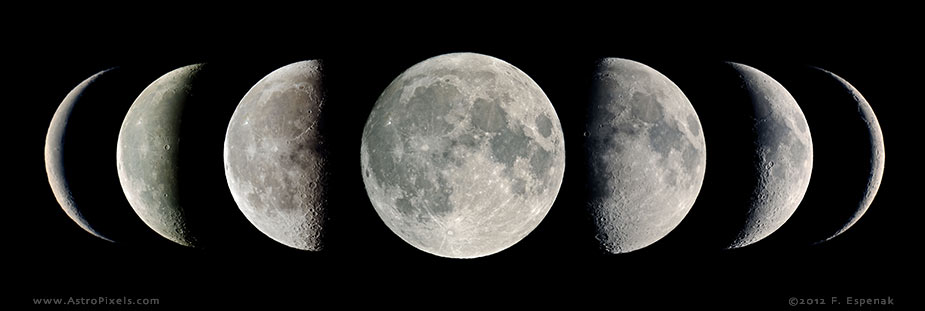
     The Israelite calendar is completely different. To start--the year does not have a set number of days. Only after the year is complete will the number of days be countable. There are 12 or 13 months in each year, depending on the year. Unlike the Gregorian Calendar, the leap years are not regular or perfectly predictable. The number of days in a month is also not set. We measure our months based on the moon. Now, most cultures originally based their months on the moon. [English Lesson: Our word "month" comes from "moonth", as did the word for month in many different cultures]. However, as time went on, the months were changed to be more rigid and predictable. Israelite time-measuring is more fluid than rigid--it follows the rhythms of the earth/Universe.


     For starters, the Israelite month begins and ends at the new moon. Once the new moon is spotted, the previous month ceases, and the new month begins. In the Israelite community, there is a bit of contention as to what moon actually begins the month. There are two viewpoints on this--one side believes the New Moon (being the dark moon--when no light is seen) is when the month beings. The other side believes when the moon comes back--a phenomenon known as "the Sliver Moon"--the new month begins. There are good arguments for both sides. I'm firmly on the New Moon side (also called the "conjunction").
[If you are interested in learning more about the Sliver vs. Conjunction argument, I highly suggest you check out 119 Ministries--they're pro-Conjunction, but they lay out the evidence for both sides fairly well.]

    The Israelite year begins in the spring. Our first month is called Aviv/Abib (also called Nisan), and usually starts sometime in March on the Gregorian calendar. Aviv is the month that opens up the year for a leap-month. The word Aviv means different things; it is the name of the first month; it means "spring", and it is also the word for a certain ripeness of barley--a spring-time ripeness. Green, full, but not yet fully dried.

Link
The month of Aviv can only begin if the barley is also aviv. If the barley is not yet aviv, spring has not begun, and the year is not over. Instead, another month is added to the year, making 13 months total, and the following month, when the barley is aviv, the new year begins. Philosophically, the year begins when the seasons "begin" again. Winter, all over the world, is associated with death. Spring, conversely, is associated with new life. Our calender fits this philosophy. The old year dies in the winter and is born in spring.

     Our days are, similarly, measured differently than the days of the Gregorian calendar. The Gregorian Calendar revolves around unchanging units of time; a second is such and such long, a minute is sixty seconds, sixty minutes in an hour, 24 hours in a day, and so on. Though nifty, this system is not entirely accurate to how the world actually works--it is too rigid--and that is why leap days and daylight savings are utilized to keep the days more or less the same.
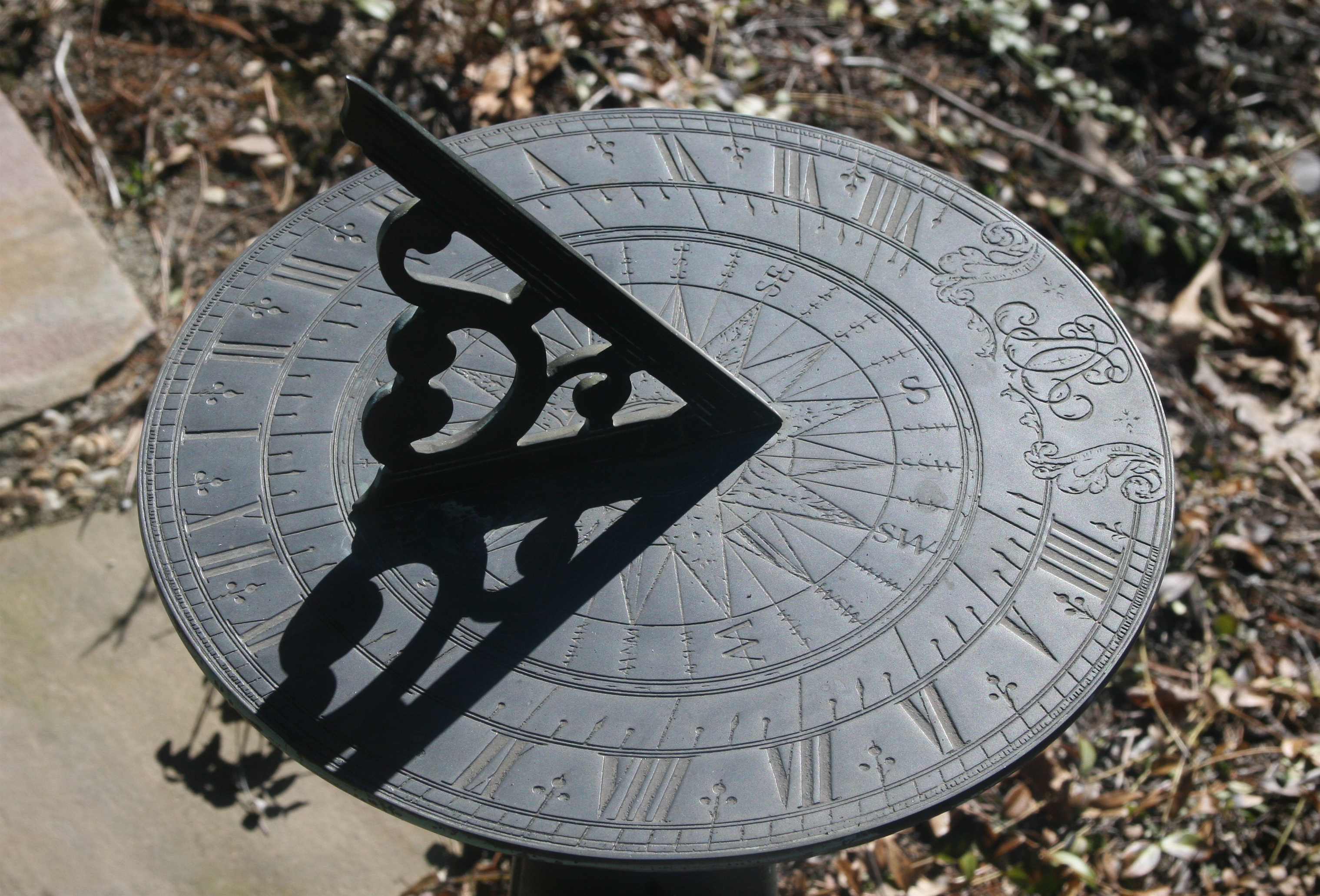
     The Israelite calendar is fluid; it flows around the changes of the seasons. As before stated, and as you probably are aware, a Gregorian day begins and ends at midnight. Israelite days, however, begin and end at sundown. Once the sun has set, the old day is done, and the new day has begun. Because of this system, daylight savings--jumping ahead or back in time--is not needed. The day follows the sunlight. In the winter, days begin earlier, as the sun sets earlier. In the summer, days end later, as the sun sets later. Our hours, accordingly, are different. They are not always the same length from day to day. Noon is when the sun is the highest, rather than when our clock says so, for example. It can be a little difficult to get used to, but once you get in the groove, it's easy.
Ya know, like how people used to use these suckers.
     These distinctions are important for a number of reasons, but, they are most important for the keeping of the holidays ("Holy-days", see?). Similarly to how the holidays of Christian America tend to occur on the same day each year (Christmas on the 25th of December, for instance...[but, why not Easter? Hrrrm, I suggest you look into that, dear reader]), Israelite holidays fall on the same day of the Israelite calendar each year. In order to celebrate properly, one must know the correct day upon which to celebrate.
     The trouble comes in when one is an American, working a job based on the Gregorian calendar, but religiously following the Israelite calendar, like I am. For example, "The Feast of Atonement", also known as "Yom Kippur", is one of the more rigid holidays. On this day, you must not drink any water or eat any food. You must do no manner of work at all. Anyone who violates this day will be "cut off" from Israel (link). In short, it is not a holiday to play around with. Last year, Atonement fell on a Gregorian weekend. It was very easy celebrate the holiday. This year, Atonement falls on a weekday, beginning on the sunset of October 2nd. Therefore, I will have to be absent from work on October 3rd. You can see where the problems arise.

     The holidays fall mostly into two clusters--the spring Feasts of Passover, Unleavened Bread, and First Fruits in the spring, Pentecost in the summer, and Trumpets, Atonement, and Tabernacles in the fall. Both the spring and the fall have 8-day celebrations (Unleavened Bread and Tabernacles, respectively). At the beginning and end of each of these 8-day celebrations are additional Sabbaths--days upon which no work must be done. Keeping track of the calendar is very important to avoid violating these Sabbaths.

Link

Upcoming, starting next week, are my favorite holidays--the fall feasts. I plan on writing a more in-depth post on each of the holidays as they come as well as how I celebrate them. However, an Overview is in order!

Feast of Trumpets/Yom Teruah
Kicking off the fall feasts is the loudest holiday of the Israelite year. We celebrate by blowing horns. All day. The horns typically blown by your average Israelite are called "shofars". They are made of a ram's horn. We don't currently own a shofar--we have one ordered and are hoping for it to arrive in time! If not, you'll see how we work around this on the day of. This year's Feast of Trumpets will begin this Tuesday night, the 23rd, at sundown, and continue until the sundown of the 24th.

Day of Atonement/Yom Kippur
Atonement, the solemnest day of the year, involves abstaining from food and water from sundown to sundown and meditating over/atoning for your sins. I'll be writing about how to make Atonement bearable once it rolls around. This year, it will begin on the sundown of October 2nd and end on October 3rd.

Feast of Tabernacles/Sukkot
This is my, and many Israelites', favorite holiday. For the week of this feast, (October 7-15 this year), we all must "dwell" in tabernacles, or, tents! Because this is a longer holiday, Israelites often travel to meet in large groups for some or all of this feast. It is a celebration of the harvest, and there is feasting every night, branch-waving, dancing, and general celebration. Whereas Atonement is a solemn holiday, Sukkot is celebratory and happy.

Thanks for reading, and stay posted for the Fall Holiday posts!
Feast of Trumpets
Atonement
Feast of Tabernacles
Any questions? Leave a comment below!