Friday, February 20, 2015

Matchmaker, Matchmaker: Thoughts on the "Goal" of Marriage, a Response to "The Myths of Singleness"

Hello again, all!

A week or so ago, I read the post "Myths of Singleness" from the blog Everyday Set-Apart. It was an interesting post, and Bethany did a good job looking at the different angles of the perceptions of "married" and "single". Related thoughts have been spinning about in my head since, and I thought it was time to write some of them down. I plan to write a much more involved post at a later time, tied in with The Song of Solomon. So, if you're interested in the Biblical nature of all of it, just stay tuned.

Suggested Listening

Need-to-Know for Neophytes
Marriage is going through interesting shifts in the Israelite community. People are trying out new methods of meeting, of setting marriages up, etc etc. I am in a unique situation as far as a newly-married Israelite is concerned. Though I have only been married for one year, I have been together with Sven for six and a half years as of last Saturday--more than a quarter of each of our lives. We were friends in high school and began to date before we both eventually converted to Israelitism in college. This sounds more or less typical for your average American, but it's quite uncommon for Isralites in their early 20s. Fitting the more-"Israelite" mold is my older brother; About a year and a half ago, my brother was married in what he calls "a deliberate marriage" (from the outside, they look like arranged marriages).

Right now, deliberate/arranged marriages are very popular in the Israelite community. For one, they guarantee a spouse of the same religion--a very important thing for Israelites. They also remove the insecurities of dating and the risks of temptation. It makes meeting a suitable partner easier, as contacts are called in and used to connect a likely couple, who takes it from there. It's a bit like online dating, only it's through acquaintances and family members that people are matched. All of the Israelites I know who have been married through deliberate marriages plan to use the same system for their children.

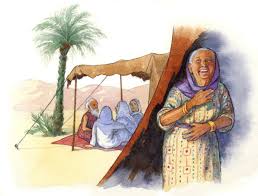
Though the system is not the same as that represented in the video above, in many ways, the current Israelite outlook is closer to "Matchmaker Matchmaker" than to the typical American one.

[I was unable to find a good link to an article or video properly describing a deliberate marriage, but for those of you with some jingle in your pocket, there's a documentary you can watch, called Betrothed, that shows the story of a betrothal beginning to end]

The Gift of Singleness and the Myth of Marriage
The aforementioned post from Everyday Set-Apart tackled the concept of the "gift" of singleness, as single people are greeted with comments like, "Oh, how blessed you are! You have so much time/connection to God/ability to travel!" These comments make it seem being single is the single-best state a person can experience. Bethany rightly points out the rather pessimistic light these comments shine on marriage--they imply marriage eats time, suppresses one's relationship with God, and limit mobility.

Make your choice!

On the other side of the coin, there is a growing movement/idea of marriage as the ideal state regardless of the circumstances, with the goal of creating a family being first and foremost. People begin planning for their children's eventual marriages while the children are still infants. There is a strong emphasis on "finding a proper wife/husband".


Thoughts
To be clear on my bias before I begin, I am a married person, and I haven't been single since I was......16. So I may be way off-base here as far as talking about other realms of experience. However, I feel falling into either camp, "Singlehood=BLESSING!" or "Marriage=PUREST HAPPINESS!", does a disservice to the camp-member.

Singleness is not a blessing or a curse; it is a state of being. It is not something to be reveled in or escaped. It simply is.

Marriage is similar. Marriages are not equal, and not all marriages are great. Everyone has their own story as to how they got into their marriage, and there are many methods that "work" for becoming married.

The key, I think, is the not state of being, married or single, but the people involved. Allow me to explain. I've read several blog posts/magazine articles in which a religious person laments their singlehood. They want to be married. They want to have a family. They're tired of waiting. Seemingly, Israelite parents who plan on having their children deliberately married prioritize the same things--a marriage for their child, a family for their child, etc etc etc.

The people who feel this way are looking at marriage the same way Bridezillas look at weddings. They want a "marriage", not a specific person. To be fair, I am a romantic, but, if I were not married to Sven currently--if we had never met--I truly do not believe I would be married at all.

This guy or no guy. All I'm saying.
A marriage is only as good as the people in it. A single person should not feel bad for being single if they have not met "that person" yet. There's nothing to mourn if there is no opportunity. Likewise, we happily-married folk shouldn't put pressure on single folk if there is no person in their sights. Marriage is wonderful. Marriage is life-changing. Marriage can complete lives--but only if the couple is right.

"Marriage" should not be the goal of anyone's life, in my view. Instead, the goal should be to meet someone worthy of marrying, a "matchless match", if you will.

On that note, a verse: "...I found him whom my soul loveth: I held him, and would not let him go..." 
Song of Solomon, 3:4

Kosher Kimchi How-To Videos!!!

Hello again!
This past weekend, Sven and I had the pleasure of spreading the kosher-kimchi knowledge, and we shot a few videos to give a better visual. Here are the links!

First: https://www.youtube.com/watch?v=WCezG9xjpG8
Second: https://www.youtube.com/watch?v=nIPg1NDj5i8
Third: https://www.youtube.com/watch?v=SbqQ8LHnpcc

Good luck in all your kimchi-making endeavors!

Saturday, January 17, 2015

Kosher Kimchi How-To

Howdy, all!
It's been a little more than a month since I last posted, and this post has been a month in the making. I hope you'll find it worth the wait.
On December 10th, Sven and I set out to make something we'd been wanting since we found out most kimchi contained shrimp: a kosher kimchi.
Kimchi is a Korean fermented cabbage dish eaten with most foods (think a spicy saurkraut). While Sven and I were in Korea, we ate kimchi every day and grew quite fond of it. When we discovered most kimchi had shrimp paste in it, we were more than a little bummed out. After a while of researching and comparing recipes, we decided it was time to make some for ourselves.

Link

[This is the part of the post where I do the recipe-mandatory "why you should eat this food" bit. If you're already sold on the concept, feel free to skip it. Kimchi is extremely healthy; it contains no processed foods, no/next to no fats, no added sugars, etc etc etc. Because of the fresh ingredients used, it is full of vitamins and minerals. In addition, it is fermented. Fermented foods are healthy for the digestive tract and do not contain artificial preservatives. The garlic and chili used in kimchi act as natural antibiotics and promote healthy heart function. Still not sold? Kimchi is delicious and versatile. The tangy, spicy flavor goes well with most any "Asian" food--plain rice, fried rice, stir fries, sweet dishes, savory dishes, any dishes--and acts as a palate cleanser between different-tasting foods. It also complements western foods like fried chicken, fried fish, and even grilled cheese. It can be eaten along with other foods or as a snack. The spicy sourness is good for both sore throats and for feeling more awake. Still feeling not totally convinced? The process is fun, simple, and a great family-bonding experience, plus, it allows for lessons on chemistry and fermentation. To sum it up, it's fun to make, good to eat, and makes you healthier. What else could you want?]

The Ingredients
We used this one as a base (the instructions are stellar; I suggest you check it out), and altered it to make it more convenient for what we had on hand. The base ingredients for any kimchi recipe is as follows, and the amounts really depend on how much you're wanting to make:
Napa cabbage
Daikon Radish
Hot peppers
Garlic
Green Onion
Onion
Salt
A fruit (we used a juicy yellow pear, but it seems almost any fruit will work)
Ginger
Dried seaweed (kelp)
Soy Sauce
A source of yeast (we used a bit of boiled potato)

Now; these are the base ingredients. Variation is allowed in amounts, types of ingredients, and optional extras. Sesame seeds are popular, as is fish sauce, a kosher alternative to shrimp paste. For us, it was pretty easy to bring these together; the only thing we needed to buy were the cabbage, radish, and pear.

The Beginning
The process of making kimchi is relatively straight forward. The cabbage must be soaked; a broth is made; the broth is added to the flavoring ingredients and blended; the cabbage and radish are chopped; the flavor-sensational paste is rubbed onto the cabbage and radish; leave to ferment. That's all.

First, cut the cabbage until the pieces are about 1" x 2". The size is not extremely important; picture eating it, and make it about mouth-sized. The radish should be cut into little strips--very thin, but it does not need to be soaked.
Then, cut the cabbage lengthwise
After it is cut, the cabbage is soaked. The most time consuming part of the process is the soaking; the cabbage must be left for soak for many hours in a salty brine. We soaked it for three hours, but some recipes require soaking overnight. What you'll see below is our set up for the soaking. To make sure all the pieces are submerged, it's recommended to put a layer of plastic wrap over the cabbage and then add a weight to the wrap. We ended up stacking two bowls on top of our soaking cabbage and adding a can of juice for greater weight. When the cabbage is halfway done soaking, take off the "lid" and turn the cabbage bits over. Then, recover and wait the rest of the time.
1 cup salt, 8 cups water
While waiting for the cabbage to soak and become flexible, we made the broth. The more important part of the broth is the kelp. Dried, thick squares of kelp are sold in Asian markets; it might be called "kombu". This will add a nice sea-salty-briney-west-coast-sea-air flavor to the broth. When we made our broth, we threw in two pieces of kelp, some onion, and the bottom of the cabbage. It boiled pretty much the whole time the cabbage was soaking, so by the end, it was quite strongly-flavored.

Time for Flavor!
When the broth was suitably flavored, it was time to add the other flavorful ingredients. The garlic, ginger, onion, green onion, peppers, and pear should be peeled as needed and chopped small. Add the broth, soy sauce, and chopped ingredients to a blender and blend until smooth. This is also when the potato is added. Not much is needed--we used about a half of a small, peeled, red potato. The goal of the potato is to add yeast to the mixture to aid the fermentation. It doesn't alter the flavor much, if at all.

A note on these ingredients; there is a lot of leeway in what you use in this step and the amounts. For example, it was suggested that the peppers used should be special "Korean Chili Flakes". We did not have Korean chili flakes. What we did have, however, were dried peppers from our garden.
Shown Here
We'd grown a variety of peppers in our garden this summer, and they'd done surprisingly well. We don't eat much spicy food, so, for lack of something better to do, Sven strung them up in our living room, and there they stayed until they were called upon to fulfill their destiny in our kimchi. The goal of the peppers in kimchi is not just heat; they should have a nice flavor as well. We used a combination of the dried chilis and some frozen peppers. The frozen peppers tasted almost like red bell peppers, but they were also very spicy. The chilis had a smoky flavor and a less-pronounced burn. So, whatever nice peppers you have on hand should suffice as long as you enjoy the way they taste. If you don't like spicy things, use less spicy peppers. If you love hot-hot-hot, add something spicier.

We blended the peppers first so we could test the flavor before we added the other ingredients.
The amount of blendedness also depends on your own personal taste. It should be smooth enough to rub over the cabbage, but it doesn't have to be baby smooth. The pear helps the texture and adds a nice sweet kick (we only added half a pear; it was very-very flavorful, and we didn't want it to be too sweet). As noted above, we added the ginger/garlic/onions last so we could gauge the pepper mixture first. Another reason we added them last was so they'd be less blended than the rest of the mixture.
And 'cause the color was nice

Time to Put it Together
Once the cabbage is soaked, the radish is chopped into small strips, and the paste is blended to satisfaction, it is time to put them together. The paste should be spread over every nook and cranny of the cabbage; coverage must be complete! For this step, gloves are suggested--the burn from hot peppers is not nice. We didn't have gloves, so we put plastic bags over our hands and secured them with hairbands around our wrists (no pictures of this; sorry! Our hands were too goopy). It wasn't ideal, but it worked pretty darn well.

Note the towel put down to catch any mess
To make things simpler, you can do the primary mixing with two spoons, and only use the hands-on approach for once it's more mixed. It shouldn't take too long; go over each piece twice, and you'll be good to go.
About like this
At this point, feel free to sample! The ideal amount of time (according to the various recipes I read) for kimchi to ferment is three to four weeks. However, first-day kimchi is individual in its flavor and just as tasty. Before it's fermented, the flavors are more individual; you'll be able to taste the pear, garlic, peppers, and ginger separately. 

Chances are, after mixing, you'll have a little leftover sauce. Don't throw it out! It can be added to other dishes for a spicy flavor, or, if you have any leftover radish, you can also make radish kimchi; Simply cut the radish into chunks and add the sauce--no soaking required. 

the radish kimchi
Once mixed, it's time to set up your kimchi for fermenting. It should be put somewhere where it will not be disturbed, somewhere free of temperature extremes. We chose the end of our table. The kimchi will need to be sealed off from direct contact from air; jars, tupperware, bowls, can all work. We used the same old bowl for the cabbage kimchi and a tupperware container for the radish kimchi. Plastic wrap should again be spread over the mixture and pushed down so it adheres to the kimchi. It doesn't have to be air-tight, just air-blocked. A lid should also be put on the container. Since gases are created during fermentation, it's important to A) Have space in the container for the gases to go B) Weigh down the lids so they don't come off and allow the gases to escape. We went a little over-board in the weighing down, as you can see; better safe than sorry, but the gases really weren't a problem.
Our set up. If you look closely, you can see the plastic wrap in the red-topped container.
The Wait
We, as you can see, actually made three containers of kimchi. The bowl, for the 3-4 week kimchi, the red-lid, for the radish kimchi, and the blue-lid, for the 3 day kimchi. Just like how first-day kimchi has its own special flavor, so does 3-day kimchi. It'll have a slight fermented flavor, and the individual ingredients will be slightly more blended than first-day kimchi. We made some Bulgogi to celebrate and taste the 3-day kimchi.
I will admit; I was little apprehensive. "Fermentation? Like beer? Doesn't that take...I dunno...a degree?". I wasn't sure how well it would work. What if the kimchi tasted nasty? What if it was slimy? What if it just tasted "off"? However, making kimchi is really just this simple. It was delicious.

A note: as we discovered, the cabbage-kimchi does not have a strong smell, no matter where you are in the fermentation process. The plastic wrap and container lid is enough to keep the smell contained. The radish, however, is very pungent. Not to be crude, but it's a bit like a fart, or cooked eggs. If you want to make radish kimchi (it has all the benefits of kimchi, and a crunchier texture), but you don't want your home to smell, put it in an unused room or closet. 

After three weeks, the kimchi will be ready to be eaten and stored. It will have a more orange color, and a slightly spicy, vinegar smell.
After three weeks; compare to the just-mixed picture.
To store kimchi, it's another "anything-goes" sort of thing. You can keep it in a bowl, container--whatever you want. We opted to put it into empty pickle jars. Once in the refrigerator, the fermentation will mostly stop. The flavor will get slightly stronger over time, but it can be stored for as you want.
At this time, the left jar has already been eaten, and we're carefully conserving the right jar.
For some more kimchi sources, check out these links:
Video: For the visually oriented and/or those interested in making large quantities of kimchi.
Recipe: This is the same recipe I linked above, for a more precise set of instructions.
Kimchi Jiggae Recipe: If you want to turn kimchi into a main dish, check out this soup recipe.
History of Kimchi: For those of you interested in history and culture.

Thanks for reading, and good luck with your kimchi endeavors!

Sunday, December 7, 2014

Zipporah, Metallest of Mothers, or, "Doing the Right Thing"


Source


     Hello, and welcome back to Women of the Bible. Today, we'll be talking about Zipporah. Zipporah, like many women in the Bible, is only included because of who she was married to. In this case, Moses. However, unlike other women (*cough, cough, Sarah*), Zipporah distinguishes herself in her own way. She does something important--the right thing.
     For starters, Zipporah is a little unique in the "wives of the Bible" sense. First off, she's a foreigner. Her family is from Midian, and her father is the high priest there (Exodus 2:15-16). While this sounds like a Romeo and Juliet type scenario, "chosen one of Israel falls for pagan priest's daughter", it's anything but. Midian, the people, were descended from Abraham, just like the Israelites. Midian was Abraham's  son by his second wife, Keturah, after Sarah died (Gen 25:1-4). As such, the Midians were close in religion to the Israelites. She is a foreigner, but she's not so much a foreigner that Moses shouldn't marry her.
Pictured: early eHarmony
     Zipporah met Moses at a well (a rather common meeting place for future spouses in ancient Israel....). He was taking a rest from his flight from Egypt and stepped in when he saw some shepherds giving Zipporah and her sisters hassle. He chases the shepherds away and helps Zipporah and co. water their sheep. Jethro, Zipporah's dad, invites Moses to stay for awhile, and Zipporah and Moses marry and have a son, Gershom. (Exodus 2:15-22). After this, Moses sets out to win son-in-law of the year award by working with Jethro's family until he gets his calling to go back to Egypt.
     Zipporah's part comes when she, Moses, and their sons are on their way back to Egypt to free the Israelites from the Egyptians (Exodus 4). It all goes a bit sideways in verse 24; the family is staying at an inn somewhere, and God shows up and attempts to murder one of the males in the party; "And it came to pass by the way in the inn, that the LORD met him, and sought to kill him."
     This bit is confusing due to a couple reasons. 1) It's never explicitly stated why God is on the warpath. 2) It's not explicitly stated which male he wants to kill. 3) There is no explicit solution, though the seeming solution is a bit odd. It could be interpreted that God wished to kill Moses, but it could also be said God wanted to kill one of his sons.
(source)
     In any case, the seeming solution is this; without missing a beat, Zipporah picked up a rock and circumcised their son, threw the foreskin at Moses' feet and scolded him. After that, God left them alone. (4:25-26). The implication of this solution is that, because of Moses' neglect of getting his son circumcised, God was going to punish him either with his own death, or with the death of his son. But why is circumcision such a big deal? It is part of the law, but the law was not given until after Moses and the Israelites were out of Egypt. The importance comes from Abraham. As covered by Genesis 17, God made a covenant--a promise--with Abraham. The upsides for Abraham were many. He would be the father of many nations, he would receive a new, meaningful name, the land of Canaan would forever be the possession of Abraham and his descendants. This is also when Sarah was given her new name and the promise of bearing a line of kings. The promise, in which YHWH promises the be the God of Abraham's descendants forever, has only one requirement, (Gen 17:9-14):

"As for you, you must keep my covenant, you and your descendants after you for the generations to come. This is my covenant with you and your descendants after you, the covenant you are to keep: Every male among you shall be circumcised.You are to undergo circumcision, and it will be the sign of the covenant between me and you. For the generations to come every male among you who is eight days old must be circumcised, including those born in your household or bought with money from a foreigner—those who are not your offspring. Whether born in your household or bought with your money, they must be circumcised. My covenant in your flesh is to be an everlasting covenant. Any uncircumcised male, who has not been circumcised in the flesh, will be cut off from his people; he has broken my covenant."


     To sum up, the promise only applies if Abraham and his descendants keep their side of the bargain; all males must be circumcised when they are 8 days old, included adopted kids. No circumcision equals no promise. No protection. No birthright. Suffice to say, it's a big deal. For whatever reason, Moses did not circumcise his son. He doomed his son to a life cut off from the people and covenant of God. Perhaps it was because he was raised as an Egyptian and did not think it was important. Maybe it slipped his mind. His reasons don't matter, because, ultimately, the result is the same--a death sentence. Notice who the covenant was made about and concerning; Abraham concerning his male descendants. Circumcision is a male responsibility. It is a matter of fatherhood and heritage. Moses shirked his duty. 
     However, thanks to Zipporah, his foreigner wife, the day was saved. Zipporah knew enough to solve the problem; immediately, she circumcised her son. She says to Moses, "Surely a bloody husband art thou to me" after throwing the foreskin at his feet. The implication here is that Moses was unwilling to do what should have been done; a life was on the line, and still, he would not act. Zipporah knew what should be done and did it. Perhaps, being descended from Abraham and daughter of a priest, she saw the importance of circumcision when her Egyptian-raised husband did not. 
     Regardless, as a mom, she's pretty metal; she performed a successful surgery on her son under immense pressure with a stinkin' rock
Pictured, Zipporah and son (link)

The lesson to be learned from her story is this: anyone can act to save a life. If you know something is wrong, fix it before it becomes a big deal. Another lesson is this; a woman is just as responsible for doing the right thing as her husband is. As long as the right thing gets done, it doesn't matter by whom.


Saturday, November 29, 2014

Sarah, Wife of Abraham: Matriarch?


Hello again!
It's been a bit of a break, but I'm happy to be back, and I hope you are, too. Today marks the kick-off of a new series, Women of the Bible. Now, this is a rather typical writing topic, especially for a young, married, religious woman. However, I hope to bring something new to the table. For starters, I'll be writing about these ladies from an Israelite standpoint, which will add another layer to what we already know. Also, unlike most writings I've read on the topic, I don't intend to sugarcoat, ignore, or minimize things in the name of having a "role model". With that being said, let's get into Sarah! [Disclaimer: It's about to get a little sarcastic and a little crude. There's a lot of sexual shenanigans going on in the story of Sarah, and I cover and critique it in this article.]


     Sarah is a bit of an interesting lady. She's commonly cited as the Matriarch of the Christian/Jewish/Israelite religion(s) because of her relationship to Abraham. Now, this is a theme we're going to run into a lot with this Bible women series; most of the women are only important because of their relationship to someone else rather than a skill or trait they themselves possess. I believe Sarah fits into this category.

     For her full story, check out Genesis 11:29-24. I'm not interested in a huge summary, but we can paint it in broad strokes. In no particular order: Sarah was originally named Sarai, and she was married to a fellow named Abram, who was also her brother (more on that later). Abram was picked by YHWH to be the progenitor of his people, the future Israelites. Sarah, however, was barren. Along their travels, YHWH gave Sarah and Abraham their new names. Abraham gave Sarah to two different men as a sex slave. He got her back. They continued to not have children. Sarah gave Abraham her servant as a sex slave. Abraham had a kid with said slave. Sarah got jealous and had the servant and her kid banished. Then, after laughing at God's promise and lying about it, she had a son, Isaac. Abraham tried to sacrifice Isaac, but was stopped by God. She lived to be 127 and died. Well hmmm. Her life sounds a lot more exciting when you put it like that.
   
     For the record, I've never liked Sarah. I never saw what was so good about her or what example she was supposed to be for us. She's a brother-marrying, willing-to-commit-adultery-at-the-behest-of-said-brother, jealous, manipulative, spiteful and faithless woman. More than an "example", I believe her life is an anti-example. An example of how things can go wrong. Let's dive into it.

Incest
     We'll start with the incest accusations, since I'm sure that's the most surprising thing in the above list. Alright, so, Abraham was the son of a man named Terah (Genesis 11:27). A few verses later, Sarai is introduced simply as Abram's wife (11:31). However, when you read the whole story close enough, something interesting emerges. As mentioned above, Abraham gave Sarah up to two different men during their lives together. Both men were rules--a Pharaoh and a King, respectively--and both times, Abraham was afraid he would be killed if he did not give Sarah to them. Both times, to avoid inciting these men, Sarah was identified as Abraham's sister. Now, when I was a Christian child, I was always told this was a clever ruse on the part of Abraham. However, it's an odd lie to tell twice. Probably because it wasn't a lie at all. Sarah was Abraham's sister. In Genesis 20, Abraham was pulling ye olde bait-and-switch again with Sarah and the King Abimelech. After finding out the truth, Abimelech confronts Abraham. Abraham defends himself in 20:11-12 (emphasis mine), "Because I thought, surely the fear of God is not in this place; and they will slay me for my wife's sake. And yet, indeed she is my sister; she is the daughter of my father, but not the daughter of my mother; and she became my wife." Straight from the horse's mouth; the two share a father; therefore, they are half siblings.
     From an Israelite standpoint, that relationship is wrong. The Law clearly states that half-sibling incest is a no-no. From Leviticus 18:9, "The nakedness of thy sister, the daughter of thy father, or daughter of thy mother, whether she be born at home, or born abroad, even  their nakedness thou shalt not uncover." No wiggle room there. The relationship between Sarah and Abraham was not a good one. The only saving grace they have is that the Law had not been laid down yet. If the two had been born at a later date, they would have been "cast out" as "abominations"--cut off from their people (Lev. 28-29).

Analysis
     Though they can hardly be blamed for doing something they didn't know was wrong, the Law is an eternal thing. A punishment would not be right, but at the same time, I think the Law has de jure as well as de facto punishments. I think a lot of the problems between Sarah and Abraham started with their sibling relationship. It's a sort of built-in punishment of sorts. More below.


"Here ya go, one bonafide sister, as promised."

Sex Slavery/"Why Women Shouldn't Do Everything Their Husbands Say"
     Second accusation; Abraham gave Sarah up to sex slavery on two different accounts. The first time was in Egypt. Abraham had moved his household south due to a famine (Gen. 12:10). As they travel, Abraham starts to get paranoid. He realizes Sarah is beautiful, and he fears the Egyptians will kill him in order to possess Sarah (12:11-12). So, he begs Sarah to say she is his sister rather than his wife in order to save him. Sarah complies (12:13). They settle down, and word of Sarah's beauty spreads. Soon enough, the servants of Pharaoh come to fetch her. In exchange, Pharaoh gives Abraham "sheep, oxen, he asses, menservants, maidservants, she asses, and camels" (12:16). Luckily for both Sarah and Abraham, God struck Pharaoh's house with plagues until he realized something was up and discovered Sarah was Abraham's wife. Sarah was returned, and she and Abraham were kicked out of Egypt (12:17-20).
    The second time was some years later. Apparently, Sarah was still a foxy lady, and Abimelech, the king of Gerar, took Sarah. Abraham, in the meanwhile, was sitting somewhere in the background, assuring everyone that she was his sister (Gen. 20:2). Luckily, once again, God steps in, and gives Abimelech a frightening dream that reveals the truth before Abimelech actually had sex with her (20:4-6). Abimelech returns Sarah to Abraham and gives Abraham some presents.
If you look really close, you can see the familial resemblance.
Analysis
     Revisiting what I said above about de facto punishment, let's look at this. Not once, but twice, Abraham gives Sarah to another man. Why? To save his own skin. Not even to save his own skin, actually, but because he was afraid for his own skin.  To save himself, he was willing to give up his wife (/sister) to adultery, rape, and whatever else these kings thought up. I bring up their double relationship again for a reason. Not only did he have responsibility to Sarah as his wife; she was his sister, too. What if it had gone off? He gave her to Pharaoh and got goods in exchange, went home, and Terah asks, "uh, hey, where's Sarah?" "Uh, well. You know. I gave her to the Pharaoh. To be his concubine. He gave me some really cool stuff in exchange, though! Check out them camels!" ........let that thought stew for a minute. He did not protest, did not fight, and did not try to find another way. Those are not the actions of a holy man; they are the actions of a weak and cowardly man. He was not being a good husband or brother.
     But! We're not here to learn about Abraham; we're here to learn about Sarah! Yes. Let's look at this again. Abraham asks her to claim sisterhood to him in both Egypt and Gerar. He explains to her the reason, "I don't want to die, so say you're my sister so (they'll just rape you) and leave me alone". And she went along with it. "But!" you may cry, "God had their backs! It worked out alright in the end, didn't it?!". Yeah, He had their backs--because He'd previously promised them their future. He's not going to cut out of the bargain because Abraham is a doofus. And, the way He dealt with it--plagues, nightmares, scoldings--shows that what Abraham and Sarah did was not the right thing. Lying and tricksy adultery is not right. Sarah had the chance to stop it. She could have said, at any point, that she was Abraham's wife, and God would have had their backs. Instead, she kept quiet, and because of her, plagues and curses were visited on two houses of duped rulers.
    Back to the de facto punishment line of thinking. Consider: would Abraham ever have pulled that "sister" card if Sarah had not been, in fact, his sister? I don't think so. He said it himself, "But she IS my sister" by way to explain away his lying. Their one mistake led into other mistakes. The lesson to learn here, besides not marrying your sibling, is that doing the right thing is everyone's responsibility. Abraham was wrong, and because Sarah did what he said, she experienced some unpleasantness (I doubt she was cheerful and excited to be a concubine), and two houses were cursed. Not to mention, in the future, their son, Isaac, pulls the same trick with his wife! (Gen 26:) Lead by example, I guess.


No Babies=More Adultery+Jealousy
    This next section explores the side of Sarah I like to call "the spiteful/faithless harpy". One of the problems plaguing (heh...."plaguing"....ahem) Sarah and Abraham's relationship from the get-go was Sarah's barren womb (Gen. 11:30). Considering the close relationship of Sarah and Abraham, it's no wonder they were having troubles having a kid (de facto punishment, again). When Abraham was told by God that he would be the father of a huge people, things started to sour in the S&A household. Sarah felt guilty for not being able to give Abraham a kid. Rather than waiting, trusting, working on the whole "please-stop-giving-me-to-rulers" thing, Sarah decides the best course of action is to have Abraham sleep with her slave, Hagar, (Gen. 16:2) and poach any resulting kids for her own.
     Abraham, being stupid (or maybe thinking he owes his wife on the whole "make-me-sleep-with-someone-else" bit), agrees. He sleeps with Hagar, and Hagar gets pregnant. Sarah then goes all Jerry Springer on Hagar and chases her out of the encampment. Abraham does not step in (Gen. 16:6). However, Hagar meets with an angel who tells her to go back and raise her son. She is told ,"And he will be a wild man; his hand will be against every man, and every man's hand against him...." (Gen. 16:12). Not the best news for an expectant mother, but in this situation, who could grow up as anything else? Later on, when Sarah gives birth to Isaac, she catches Ishmael, Hagar's son, "mocking" Isaac. (Gen. 21:9). Sarah appeals to Abraham about the matter, and Hagar and Ishmael are given a bottle of water and some bread and kicked out into the wilderness (21:14). Hagar wanders, lost, until the water runs out. She leaves Ishmael under a bush because she can't bear to see him die, but, at the last minute, God shows up, tells her where to find a well, and looks after Ishmael. He grows up to become an archer and marry an Egyptian (21:15-21).
Ishmael - Getty Images
And that's the LAST time you make fun of your brother!

Analysis
     This is another part of the story that has always rubbed me the wrong way. Neither Sarah nor Abraham did what was right. If Abraham had been faithful (as in the religious way. Obviously, neither one of them is maritally faithful), he would have refused to sleep with Hagar because he believed God's promise. If Sarah had been faithful, she never would have suggested such a twisted arrangement to begin with. As in the previous stories, we see that nothing good comes out of doing wrong. Sarah's actions lead to jealousy, manipulation, and attempted murder. She had no idea God would protect Hagar and Ishmael. She didn't care. They would have died in the desert for her pettiness if God had not stepped in. Abraham suffers as well. He sees Ishmael as his son, but he listens to his wife and sends him away (Granted, God also told him it would be okay), but he nonetheless suffers. He never gets to see his son again.
     Looking at long-term consequences, many people believe Ishmael to be the progenitor of the Muslim people and ancestor of Muhammad. He only existed thanks to Sarah's fecklessness. So, who is responsible for the fighting in the middle east, as well as centuries of strife and bloodshed? Sarah.
Thanks, Sarah!

Further Faithlessness: Laugh and Lie
    We're drawing near to the end of our tale. Abraham and Sarah live to a ripe old age of 100 or so, and Sarah still has not had a child. The couple is visited by a mysterious trio who tell Abraham that he and Sarah will be parents shortly. Sarah, who is sitting in the tent, laughs. Gen. 18:13-15 holds the following exchange,

"And the Lord said unto Abraham, 'Wherefore did Sarah laugh, saying, Shall I of a surety bear a child, which am old? Is any thing too hard for the Lord? At the time appointed I will return unto thee, according to the time of life, and Sarah shall have a son.' Then Sarah denied, saying, 'I laughed not'; for she was afraid. And he said, 'Nay; but thou didst laugh'."    

     Though Sarah lived her life following what God told Abraham, moving from point A to B, and though she was saved on two occasions by His intercession, she does not believe Him when he re-gives His promise. When confronted, she lies about it. Not really surprising, considering her track record.


Analysis  
     There's not much to say about this one. It doesn't really connect to others except for the common thread of faithlessness. It does show that Sarah, at least, did not learn from her experiences. She had many decades to realize that God wouldn't let her family down not matter what, but she did not learn that lesson.

Summary
Sarah is definitely an important figure in the Bible and to our history. However, she is not important for any positive qualities she may have possessed. From the beginning of her story to the end, all she makes is mistakes. It's hard to find one good thing she did. She married her brother, was willing to trick others into adultery, invited her husband to commit adultery, abused her husband's baby-mama, attempted to have said baby-mama and baby (though, to be fair, he was older than 13 at the time) exiled to their doom, and, after all that, did not trust that God would pull through for her. Yes, she had faith in her husband, but that lead her to deceiving and seducing. She is, by definition, our matriarch, but she is not a role model by any stretch of the term. The lessons to learn, I suppose, are these. A) The story of Abraham and Sarah is probably not what you grew up learning; nevertheless, it is important. B) Keep a hold of your sexuality. If it gets out of control, it can and will cause huge and long-lasting problems. C) Keep faith in God; he won't let you down, even if you screw up big time.


Friday, October 31, 2014

Announcement: Upcoming Series, Women of the Bible: Facts and Opinions

(Link)

I'm happy to announce the next series to come from this blog! I'll be writing on the more and lesser-known women from the Bible from an Israelite perspective. I'll cover truths and fictions, impact on Israelitism, and what their stories mean today (for both men and women); for many of the stories, I'll be focusing on marriage dynamics. Expect factual learning mixed with critique, analysis, and some snarkiness (no general milquetoast writings from me, you can be assured). Below, in no particular order, you'll find a list of the women I'm planning to cover. The list will be updated as things develop.

Old Testament
Sarah/Hagar
Zipporah
Leah/Rachel
Ruth/Naomi
Deborah/Jael
Lot's wife/daughters
Tamar
Rahab
Hannah
Esther
Jezebel
New Testament (Undecided here, too. I'm not as well-versed in these ladies and their doings)
Mary/Martha
Mary
Salome/her mom


Sunday, October 26, 2014

Update: November

Well, things have been getting rather busy around here in the last few weeks. I just finished up my series on the fall holidays, and it may be a small bit before a new post comes out. Mostly because I'm not sure where to go next (ha). I'm expecting to write some posts about the Song of Solomon, maybe one on skirts/dressing norms, and a few general-type posts as they come to mind. If you'd like to see a post on anything in particular/if you have any questions you'd like answered, please, leave a comment on this post, and I'll do my best!