Saturday, June 6, 2015

Israelite Marriage Part II: Rape vs. Seduction in Israelitism

    Carrying on to our next stop in the journey of Israelite marriage, in this post, we'll be looking at rape and seduction and the differences between them, followed by a more in-depth look at rape. To follow is a post with a more-in depth look at seduction.

     It's a bit of a sordid topic, but it is important due to the many misconceptions about it and how those misconceptions are perceived. The topic is also a a serious one, and I intend to explain it with due diligence.

[Disclaimer: if not obvious from the title, this is not a post for the kiddies. We're going to delve into some unsavory things, and I'm not one for mincing words]
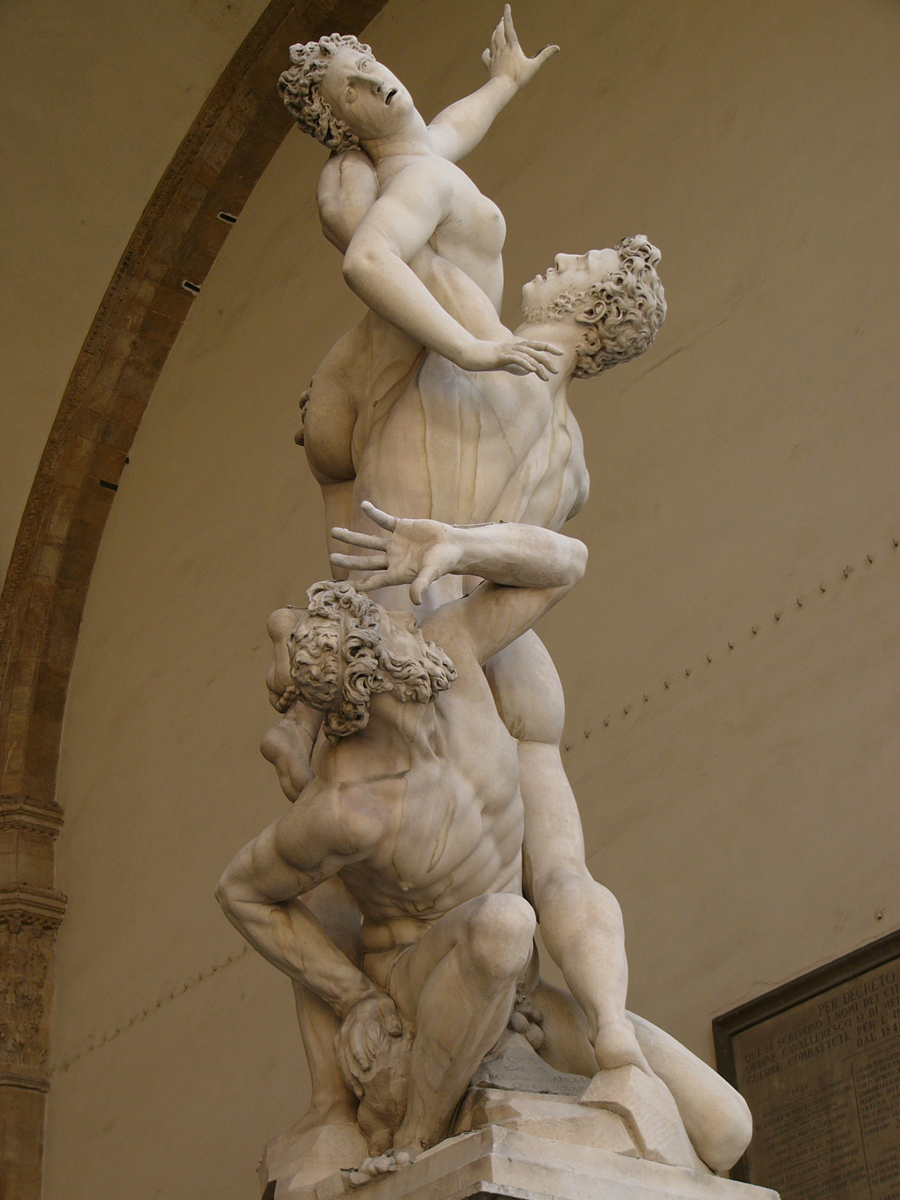
Behold: Tasteful and topical Classical nudity!

Rape vs. Seduction
    The key problem in this topic is the differentiation of "rape" and "seduction" in the Bible. As with most things, it boils down to translation. In the NIV version of the Bible, the two different words are translated as the same word; "rape". This is obviously an issue for many reasons. I've heard many volleys hurled towards Abrahamic religions in regards to this mistranslation.
     The verses in question are typically Deuteronomy 22:28-29. In the NIV, they read, "If a man happens to meet a virgin who is not pledged to be married and rapes her and they are discovered, he shall pay her father fifty shekels of silver. He must marry the young woman, for he has violated her. He can never divorce her as long as he lives."
     The fallout from this translation is huge. The non-religious say, "How could you support a God who supports rape?!". I've heard religious teachers try to explain it away while keeping to that definition, "rape", "Well, this way, the now non-virgin woman would be provided for all her days! So it's a good thing." For an individual male, this leads to the thought, "If a woman doesn't want me, all I have to do is rape her, and we'll be together forever!". I'm sure you can imagine how believing this would cause problems.
     In addition to being disgusting in implication, all of these thoughts are just plain wrong. The word does not mean "rape" at all. When taking the word to the original writing, it means "to lie down", the meaning dependent upon the context. It can mean to lie down for a nap, to sleep, to die, or to engage in sexual intercourse. However, there is no implication of violence or force; the word is restful in all of its connotations (link). It is inappropriately translated as "rape" in many cases of the Bible when the closest word we have in English for it is "seduce". The Bible does not call for a woman to be forced to marry her rapist. The image is completely different; instead, if a woman and a man are fooling around without the knowledge of her father, she may be forced to marry that man.

Rape in the Bible
     Indeed, rape in the Bible is something entirely different and carries a completely different set of consequences. In Deuteronomy 22:25-26, KJV, we see the consequences of rape. "But if a man find a betrothed damsel in the field, and the man force her, and lie with her: then the man only that lay with her shall die. But unto the damsel thou shalt do nothing; there is in the damsel no sin worthy of death: for as when a man riseth against his neighbour, and slayeth him, even so is this matter."
     The key is the verbs in the respective verses. In verses 25-26, we have the added verb "force" to the "lie down" verb. In the Hebrew, "force" is a similar word, denoting the use of strength and the action of overcoming another's strength (link). Verses 25-26 show a rape. A woman is forced against her will to have sexual relations with the man. It is equated to murder, and rightly so. Unlike in other aspects of the Law, (Deut 17:6) that require more than one witness for a death sentence, this law seems to be an exception. The Bible does not take rape lightly, and nor should we.
     In contrast, verses 28-29 lack the "force" verb. Though there is the word translated (in the KJV) as "lay hold of", it does not bear the same meaning as "force". Instead, it means "to manipulate" or "to use unwarrantably". This man is not so much a rapist as a trickster, using smooth words to gain consent. He's more of the "love 'em and leave 'em" type. Therefore, he is not punished in the same way as a rapist; instead, he is made to take responsibility for the woman he would have left.

To review: "rape" and "seduction" in the Bible are two distinctly separate actions. Rape is equated to murder, where seduction is seen more as a breach of protocol. A raped woman is not treated any differently than any other woman; her status is not affected by her rape.

(Note: Whenever you come across a verse in the Bible that uses "rape" "ravish" "lie down with" "take hold of" etc etc etc, I strongly suggest you research into the matter before making the wrong assumption. The best resource I can recommend is the Strong's Concordance which provides a definition for every translated word in the Bible from its source word)
Shown: Force
Shown: Seduction

Biblical Rape vs. Modern Rape
     If you were reading attentively to the above section, you may have noticed some holes in coverage for the rules. Rape indeed is the same as murder, but what, precisely, constitutes a rape? For one, it is not the same as the modern conception of rape, and for two, it relies on a system of assumptions that may or may not be in place.
     According to the Department of Justice, the legal definition of rape in modern America is, "The penetration, no matter how slight, of the vagina or anus with any body part or object, or oral penetration by a sex organ of another person, without the consent of the victim...[the definition] includes any gender of victim or perpetrator, and includes instances in which the victim is incapable of giving consent because of temporary or permanent mental or physical incapacity, including due to the influence of drugs or alcohol or because of age. The ability of the victim to give consent must be determined in accordance with state statute. Physical resistance from the victim is not required to demonstrate lack of consent" (source).

     The Biblical definition is a little trickier to pin down. For one, the only type of rape we are given is male-on-female. Female-on-male rape is not addressed (more on that in the "assumptions" section), nor is male-on-male rape directly addressed. Instead, we must string together a series of examples to form a picture of what was considered rape.
  1. When a man physically forces a woman to have sex with him (implied any kind of sexual goings on); this is seen as the equivalent of murder (Deut 22:25-26)
  2. Male-on-male rape is possibly worse than male-on-female rape: 
    • In Genesis 19, Lot is confronted with a mob who wish to "know" the two angels who are currently visiting. Hoping to placate the mob, Lot offers his two daughters instead, making the point that they are virgins. The crowd threatens to "do worse" to Lot and begin to attack him. Luckily, at this point, the angels strike the mob with blindness. Now, this is a loose example. For one, Lot was not the best guy (see, offering up his daughters to a fate equal to murder), and this took place before the Law was given. However, we see from his attitude that, at least to Lot, it would be preferable for his daughters to be raped than for his guests.
    • To support this, we see another story, this one featuring a Levite, in Judges 19. The Levite is travelling with his concubine, and an old man invites them to stay at his home. That night, a mob appears and demands to "know" the Levite. The old man offers his own virgin daughter and the Levite's concubine, saying, "but unto this man do not so vile a thing". The mob refuses, but the Levite gives them his concubine. They rape her to death.The resulting outrage from the nation of Israel results in the near extermination of the entire tribe of Benjamin. Like the above example, this one is not perfect. For one, a Levite should not have a "concubine"; she should be his wife, fully. Secondly, though both the old man and the Levite consider the violence the mob intends to be horrific, giving up the concubine to be raped to death is not a good act. The Bible does not support allowing others to be murdered; however, this does show how desperate the old man and Levite were to prevent this male-on-male rape.
     Missing from the Biblical definition are female-on-male rape and forced consent. In the Bible, we do see three examples of what could be considered female-on-male rape today. 

    The first is Lot's daughters. In the later half of Genesis 19, we see that Lot's daughters, thinking the whole world was destroyed, decide to get their dad drunk and sleep with him to preserve humanity. Their plan is a success, and both become pregnant, eventually giving birth to the Moabites and the Ammonites, respectively (being two of the Enemy Nations to Israel for the rest of the Bible). However, what the daughters did is not considered rape; instead, it is like the scenario in Deuteronomy 28:29; they tricked their father, but he did, in fact, consent. When going to the original translation, we find "and the firstborn went in and lay with her father; and he perceived not when she lay down, but he did perceive when she arose" (Gen 19:33), and her sister follows suit the next night. The younger sister pulls off the same trick. The second daughter's success shows us the full story; though Lot did not necessarily know what was going on the first time, he did know the second, and yet he still allowed it to happen, showing that he did not mind. As a result of their incest, we see the birth of two enemy nations to Israel (in this way, it is similar to the story of Sarah, Abraham, and Hagar). Also, note the lack of the "force" verb. 

Terrible dad. All I'm sayin'.
     The second example is that of Judah and Tamar, found in Genesis 38. Due to a long series of circumstance, Tamar is the widowed daughter-in-law of Judah, son of Jacob. she dresses up like a prostitute, seduces Judah, then blackmails him with incriminating evidence once she discovers she is pregnant. She gives birth to twins, and becomes an established member of the family. Though not so heinous as the actions of Lot's daughters, Tamar's seduction is just that; seduction. She tricked Judah into believing she was a prostitute, but he did, ultimately, consent. Judah even says Tamar acted more righteously than he did (Gen 38:26), putting her actions firmly into the "not rape" category.

     The third example is Potiphar's wife and Joseph, found in Genesis 39. In this chapter, Joseph is acting top-slave for Potiphar, an official of Egypt. Joseph is a bit of a hotty, and before long, Potiphar's wife takes an interest in him. She tries to seduce him, saying, "lie with me" (Gen 39:7), but Joseph refuses. After some time of this song and dance, she catches Joseph alone, "and she caught him by his garment, saying, Lie with me: and he left his garment in her hand, and fled, and got him out." (Gen 39:12 KJV).  The key verb in this verse is "caught". Though the word is translated as "caught", it is the very same verb used to show seduction--"to manipulate". Just like in Deuteronomy, when a man seduces a woman, Potiphar's wife was attempting to seduce Joseph. Her intent was not to bump him over the head and have her way with him. Instead, she manipulated his clothing, saying, "come have sex with me". Because Potiphar's wife cannot "force" Joseph, she turns to "manipulation" instead.

Biblical Assumptions for Rape
     The examples in this section lead us to the second difference between modern and Biblical ideas of rape. Biblical considerations of rape depend on a web of assumptions that must be in place. 
  1. No single, unbetrothed woman will be raped (Deut 22)
  2. A raped woman must fight back or resist (Deut 22:25-27 and 22:24). This will not only lead to the capture of her rapist and prevention of the rape, it will dually serve to prove her innocence in the matter.
  3. People will help prevent rape (Deut 22:24, 22:27)
  4. No one will lie about rape (Gen 39:14-18, Deut 25-27)
  5. Men are upright, honorable, and ultimately good (Gen 19 and 38)
     Ultimately, it boils down to one big assumption: The only way for a person to get raped is if a woman is alone with no one to help her. If there are people, she will be saved. If a man remains sober, he will not be raped, and if he is upright, he will not be tricked.

Explanations for Assumptions

  1. One of the reasons people tend to go with the "a woman must marry her rapist!" idea is the different descriptions of women in the verses. In Deuteronomy 22:28, the woman described is specifically an "unbetrothed" woman. In the verses 25-27, the woman is betrothed. This leads many to assume it's a matter of property--it's okay to rape a woman who belongs to no man, but not okay to rape a woman who does belong to a man through betrothal. To make clear, "betrothal" is the de facto state after marriage is promised but not yet consummated. However, it is not a matter of property, as shown by the verbs, "to manipulate into sex" versus "to force to have sexual relations". What this shows is an assumption that in a good and proper world, unbetrothed women would only be seduced, not raped by force. I am not sure why this is the assumption; my guess is that unbetrothed woman were either A) too young to be betrothed, making the seduction a case of child molestation, B) not left on their own, disallowing them from being  in a field, unprotected, at risk to a rapist. Betrothed women, on the contrary, were often given "married" status, meaning they were not protected in the same way as unbetrothed women. Where an unbetrothed woman would live with her family, probably with familial guardians when she walked abroad, a married or betrothed woman was free to live with her husband/fiance, and if her husband was busy, she might indeed be walking alone where she could be preyed upon.
  2. The whole goal of the "fight back" clause is to prevent the rape. The idea is presented in the negative sense, "If she was raped in a city, that means she didn't cry out, which would have prevented the occurrence". However, this assumption relies on other assumptions--that the people would hear her screams, that she would be free to scream--her mouth would not be covered, and she would not be unconscious. 
  3. Linking to the above assumption, there is another that follows; that people, hearing a woman scream, would arrive in time to defend the woman and capture the rapist. As we saw in the stories of Lot and the Levite, the opposite is sometimes true. Sometimes, people will hear the screams and A) do nothing or B) join in the rape. 
  4. In the rules about rape, we see that a woman screaming means instant death for the perpetrator. However, this law only works if the woman does not lie. We see in the story of Joseph that he is imprisoned unjustly due to the false report of Potiphar's wife. According to Israelite law, rather than prison, Joseph would have been executed; all that is required is the scream of the woman. However, the Bible does acknowledge Joseph's imprisonment as wrong; therefore, the law relies on honesty.
  5. In modern American law, a drunk/high man who has sex with a sober person has been raped. His state disallows consent on his part. However, the Bible takes a hard stance against drunkenness, (Proverbs 20:1, 23:29-35, Ephesians 5:18, Isaiah 5:22, Hosea 4:11, and many more places), and the implication is this: if a man allows himself to become drunk, anything that happens as a result of his drunkenness is his own fault, or, as the adage goes, "A drunk man's words are a sober man's thoughts", this time turning "words" to "actions". Lot sleeps with his daughters because he is drunk. Because Judah is drunk with lust, he sleeps with a prostitute who is actually his daughter in law. Only Joseph escapes the seduction before him, because he is a sober and upright man. 
Conclusion
     The key issue with the Biblical assumptions is this; once one of them is broken, it all falls in; in a perfect world, people would follow the Law, and none of these other laws would be necessary. Any scoundrel or nonbeliever evil enough to break the Law would be apprehended immediately by righteous people and summarily punished. Men would be sober enough to fend off any unwanted advances. However, we do not live in a perfect society. We have occurrences that fall outside of these rules; we can only do our best in regards to these things.

Also; the Law does not call for a woman to marry her rapist!!! For a  more in-depth look at seduction, check out the next post!

Saturday, May 2, 2015

Alternate Viewpoints: Israelite Marriage

Hello again!

Today, I'll be exploring and explaining the different views Israelites have on marriage/weddings/dating as well as looking at what the Bible actually says. As I mentioned in my last post, the Israelite community is big into what is sometimes called "deliberate" marriages. Today, I'll be tackling a couple of things. For you newbies, I will explain in greater detail the workings of deliberate marriages, and for both newbies and old hats, I'll present an alternate viewpoint.

[NOTE: Adult content warning! As we are looking at marriage, there will be some rated R things said/shown in this post. They are Biblical rated R things, but rated R nonetheless.]

Without further ado, let's get into it.

(Source)
Deliberate Marriages and "Hebrew Israelites"
     A large portion of Israelite people refer to themselves as "Hebrew Israelites", in an attempt to differentiate themselves from Israelis, as well as to add something of their character to the religion. For the purposes of the following post, I will use "Hebrew" to denote the culture that often accompanies Israelitism but does not come directly from the religion itself. For example, many Hebrew Israelites mothers use cloth diapers. There is no law in the Bible regarding cloth diapers, but the usage of cloth diapers is something found in higher percentages in the group "Hebrew Israelite" than in a random assortment of Americans.
     Hebrew Israelites are the Israelites, to my knowledge, most interested in the idea of a deliberate marriage. Regardless of the parents' marriage origin, the Hebrew Israelite parent regards deliberate marriages as "God's Plan for Marriage", saying it is the ideal form of marriage, resulting in the best marriage relationships and families, etc etc. A deliberate marriage consists of many precise steps. I will render them as best I'm able; I have experienced a deliberate marriage secondhand through my brother, but I have not been able to find any fantastic sources to outline the steps for you guys. If I mess any of them up, I apologize heartily. For the purpose of explanation, I'll take the part of a single Hebrew Israelite lady who lives far away from her possible gentleman (this is a common scenario; most Israelite communities are spread far apart from each other. It's usual for couples to come from different states, etc).

  • Step 1:  Recognize a desire for marriage. Talk to your parents about finding a proper prospective husband.
  • Step 2: Your parents will begin putting out feelers with acquaintances, acquaintances-of-acquaintances, different congregations/communities, etc, looking for a suitable suitor.
  • Step 3: Once a possible fella is found, your parents may set up a meeting with said sir and his parents to see if he passes muster. You may or may not know when/if this is occurring. Your parents will interview the guy in regards to his personality, background, interests, beliefs, wishes for the future, etc., to make sure it is all kosher. If a red flag comes up--conflicting personality/interest/belief, etc--they will politely cut off contact and resume the search. Assuming the man passes the test, they move on to:
  • Step 4: Contact! You are informed of your suitor's name and background and given a way to contact him. Depending on where you live/how strict your parents are feeling, it could be emails sent back and forth, read by your parents first to make sure nothing too saucy is being said. This is the time for you to get to know your possible spouse's personality and see if they're the sort of person you could marry.
  • Step 5: Simultaneous to your communication, your family will still be checking out the guy, and his family will probably be scrutinizing you, as well. Contacts will be utilized, internet history will be searched, and every action is observed to check for suitability.
  • Step 6: First meeting! If some time has passed and it seems both parties are on board, a meeting will be arranged. The meeting, and subsequent meetings, are chaperoned by a family member/family friend. This is a chance to build a relationship with the person. Little to no physical contact will be allowed between you and your future husband at this point. Expect to sit on a different couch than him, no hand holding! and certainly no hugging or other physical affections.
  • Step 7: Approval. If all is in order, your families (ie: "fathers") will agree to allow your relationship to progress to the next level. Hurray! It's time for:
  • Step 8: Betrothal! At this time, a contract (called a "Ketubah") is drafted by yourself and your future husband. Some Jewish marriages also use Ketubahs. In a Ketubah, the outline/guidelines for your future life is planned--how you will deal with future children, how you will treat each other, etc. Once the Ketubah is signed, you are married, on paper. Practically, however, you are betrothed. The equivalent would be a marriage certificate. According to the interpretation of the Law, you are married at that point, but you yourself may not view yourself as married. Ketubahs may be bought or handmade, printed or written, etc. I myself painted the Ketubah for my brother and sister-in-law. At this, you may progress to the next physical level--hugging, and maybe some light kissing.
  • Step 9: Separation! The strictest Hebrews require a period of separation after the betrothal is official. The groom must go home and prepare a place for his future wife. Contact between you and your hubby should be kept to a minimum. The separation should last a significant portion of time, even several months. This is your time to say goodbye to your family and single life.
  • Step 10: Marriage! You will be prepared to move in with your husband, bags packed, etc, and at some unexpected time, he will appear. The wedding will be held, and after that, you will move into his house and be a married couple. (It's like a surprise party; everyone but the bride is usually in on it).
    And that's it! Now, depending on the relationship, there may be more steps, or there may be less steps. There is no commandment in the Bible in regards to the steps, though there are patterns existing for the steps (Notably, the relationship between Yeshua and the church). The main idea is to take the relationship out of the individual's hands and place the control in the hands of the parents/community to create a stronger bond. Parents and community members will be able to judge with clearer (ie: less lusty/shallow) heads the value of a relationship. They will choose a suitable spouse to start a family with. Family-starting is a very important part of deliberate marriages. Everyone I know of who is in a deliberate marriage has become pregnant/had a child in their first year. A child will cement the relationship and keep the focus where it should be--family.
    The fear is if marriage is left in the hands of the individuals, the wrong choices will be made, or there will be a sexual relationship before time. There is a belief that a couple who engages in sexual acts before marriage will be cursed in some way, because they have gone against "God's plan for marriage". I have heard couple who were not married deliberately lament their lusty pasts; this is a large factor in parents wanting to make their children follow "God's plan" when it comes time for them to marry. Parents who were married deliberately wish to help their children avoid the sordid experience of modern dating. Deliberate marriages are thought to be the only Israelite and holy way to get married.

Achtung!
Personal Disclaimer
     I am rather biased against the view deliberate marriages are "God's Plan for Marriage". I will explain the personal bias here and the Biblical/scholarly bias in a bit. To be clear, I think deliberate marriage is a fine way to go about getting married. I respect people who marry in this way for their trust, faith, and determination. I have no problem with two adults choosing to marry deliberately. I have a problem with the pervasive idea that deliberate marriage is "God's Plan for Marriage" and the only legitimate way one can marry.
    Part of my bias comes from the environment preceding my own marriage. My brother had been married deliberately a few months prior, and the community was abuzz with "God's Plan for Marriage". My parents were on the bandwagon and very proud of/excited for my brother, naturally. However, there was an inevitable side effect to this buzz; I had been engaged for approximately a year, dating for 5 years, and my relationship was being viewed as "against God's plan".
     My personal bias comes from my feelings of having done "everything right" but coming up against "God's Plan for Marriage". By Hebrew standards, my relationship with Sven was scandalous, even X-rated. Kisses should only be shared between spouses! Dating?! The temptation! How dare we choose our spouse for ourselves! Etc, etc, etc.
Cover your eyes, kiddos; this stuff is for married grown ups only!
     Now, to be fair, I never had anyone scold me about my relationship with Sven, and nor did he. We were, however, involved in some slightly embarrassing conversations where someone would declare heartily, "X couple is doing the right thing! It's God Plan for Marriage!" and then give us an awkward side-eye. There'd be a little throat-clearing, and someone would change the subject.
     Being of the scholarly mindset, this got me interested in what actually was God's Plan for Marriage. Were they right? What was required? What were the proper steps to take? So I started digging.


First off, "Love"--Jacob and Rachel
     A large part of the Hebrew criticism of typical relationships comes from their problems with love. Love is inconstant. Love is shallow. Love is blind! "Marriage for love is a new concept" is a common mantra. This is the first and easiest claim to knock down. The Hebrew view of marriage is businesslike. It revolves around contracts, requirements, and steps. Everything is logical and weighed out. There is little room for love there.
    To disprove this claim, let's look at a couple of Biblical relationships. In Genesis 29, we can read part of the story of Jacob, also called Israel, the father of the 12 tribes. Back when Jacob was just plain old Jacob, he was single and looking to find a lady. He went to stay with his maternal uncle, Laban, and there met Laban's daughter, Rachel. Upon first meeting, Jacob kissed Rachel and introduced himself (29:11). He began to work with Laban for awhile, helping him with his flocks and lands, and Laban was impressed. He offered Jacob a reward, and Jacob asked for the hand of Rachel in marriage. "And Jacob loved Rachel; and said, "I will serve thee seven years for Rachel thy younger daughter."" (Gen 29:18). Right off the bat, Jacob and Rachel's relationship does not fit the Hebrew mold. Jacob met Rachel himself, not through a go-between, and kissed her upon first meeting, before he even introduced himself. When he asked for her hand, it was because he "loved" her. We are then told, "And Jacob served seven years for Rachel; and they seemed unto him but a few days, for the love he had to her" (Gen 29:20). The word "love" used is defined thusly, "to have affection for (sexually or otherwise)" (source). Jacob did not work seven years because he felt he had to. Jacob worked seven years because he loved Rachel. His love was such that the years felt short. This was not friendship-love. This was not fondness-love. This was love-love. And even after Laban tricked Jacob and made him marry his other daughter, Jacob was willing to work seven more years because he desired Rachel so much (Gen 29:27). This proves marriage for love is not "new". Its popularity may be new, but Jacob himself desired to marry for love. Marriage and love go together. It is not required for marriage to precede love. Adding family to the mix does not always make things better; for Jacob, it ended up with him having two wives; one he disliked, one he loved, a slew of angry children, two concubines, the curse of barrenness, much family strife, and a son sold to a foreign country. If he had been able to go along with his love and marry solely Rachel, their lives would have been much easier.
Too scandalous?

Second, "Process"--the Song of Solomon
    As you saw, the process of deliberate marriage is....well....deliberate. The steps should be followed, in order, or else. However, there is one glaring example in the Bible standing against deliberate marriage as the only way. I present to you The Song of Solomon. The Song of Solomon is one of the most misunderstood books of the Bible I know of. I've heard it's about the love of Solomon. I've heard it's about how we're supposed to love God. I've heard many things. A lot of the confusion comes from the structure and language. Much of the language doesn't translate as to the mood or gender of the speaker (but the original reveals the meaning) I highly suggest you look up the Companion Bible's explanation of to clarify it. (Or check the Strong's Concordance and go word by word).
    In short, the Song of Solomon is the story of a fatherless vineyard worker who loves a shepherd (1:5-6). The story is told by the woman to the women of Solomon's harem. It tends to jump out of order since it is a story, but this is the jist: The vineyard worker is sent to the vineyards by her family to keep her away from the shepherd , but nevertheless, they carry on with their relationship (1-2). One day, King Solomon sees the vineyard worker and tries to seduce her (6:8-10). He takes her away to his palace to try to add her to his harem. She resists (1:4), proclaiming loudly her love for her shepherd to the concubines of Solomon (7:10). Her shepherd follows her to the city. The woman tries to escape, but is caught and beaten by the guards of Solomon (5:7). Impressed by their love and the vineyard worker's faithfulness, Solomon sends her off home, accompanied by her shepherd (8). Now, that's the PG version. There's a lot more going on in this story.

  • The woman's family heartily disapproves of the relationship. sending the woman to tend the vineyard to keep her apart from the shepherd (1:6, 2:15)
  • It is implied the relationship of the shepherd and woman has progressed to the betrothal stage without the approval of the girls' family (2:16, 3:4, 4:8)
  • There's a little bit of spicy raciness going on between the shepherd and woman. In the first chapter, (1:16-17) there is talk of a house made of trees. Due to the translation of the King James, it seems they are talking about an actual home. When looking at the actual meaning of the words, however, it is revealed they are talking about a secluded wooded area where they meet each other in secret. The translated as "house" is closer to "bower" in reality, and "rafters" more like "retreat". Chances are the KJV was translated to fit the sensibilities of the time. The "banqueting house" of 2:4 is closer to "vine arbor" or "vineyard bower"
  • In this bower, a series of rather physical intimacies take place (derived from the compliments the woman and shepherd trade--more on these later)
     Looking at the more detailed version of the story, this seems like a cautionary tale. Saucy girl who spends too much time in secret with shepherd is picked up by notorious womanizing King, bribed, beguiled, beaten, and eventually sent home. However, the story does not have any caution in it. Instead, the relationship between the shepherd and woman is shown as pure while Solomon plays a villain's role, twirling his mustache while plotting to steal a woman's virtue by hook or by crook.
Pictured: Solomon (Source)
     It is also impossible to divorce the relationship of the woman and shepherd of its sexual nature. While the woman is recounting her tale, she includes many spicy details, "I sat down under his shadow with great delight, and his fruit was sweet to my taste" (2:3) (remember, her beloved is a shepherd; he does not grow fruit), "by night on my bed I sought him whom my soul loveth..." (3:1), "Thy lips are like a thread of scarlet...Thy two breasts are like two young roes that are twins, which feed among the lilies" (4:3-5), "Thy lips...drop as the honeycomb: honey and milk are under thy tongue; and the smell of thy garments is like the smell of Lebanon" (4:11), "...His belly is as bright ivory overlaid with sapphires" (5:14), In 4:12-15, the shepherd describes the woman as a shut up garden, full of wonderful plants and fruit, along with a fountain. The woman replies in 4:16, "Let my beloved come into his garden and eat its pleasant fruits". Immediately thereafter, the shepherd replies, "I am come into my garden..." (5:1). There is nothing about these compliments that suggests an innocent meaning. The shepherd does not grow fruit; he is a shepherd. At night, on her bed, the woman thinks of the shepherd. The shepherd refers directly to her lips, breasts, taste, and smell. Obviously, the two are physically well-acquainted. The shepherd describes the woman as a garden; yes, she owns a garden, but she is not a garden herself. She tells him her "garden" is his, and for him to enter, and he responds that he is. Now, perhaps, they are talking of purely mental attributes, but it does not seem so. Their descriptions are too sensuous. 
     There can be no doubt the shepherd and woman are not following the plan for a deliberate marriage. They meet on their own, against her family's wishes. They are very physically intimate, or at least have no shame in complimenting each other. They are betrothed, through agreement with each other, but there is no planned separation (though a separation does occur thanks to Solomon's kidnapping). Yet, at the end, the woman is celebrated by her family, who say, though she is young, that if she is a wall, they will build her into a "palace of silver" (8:9), and she affirms her worth, saying the shepherd is the only one for her, and Solomon can keep his 1,000 gardens; she'll be happy with her one vineyard and her beloved (8:12-14). Rather than being scolded by her family or receiving any, "I told you so"s, the woman is applauded for her faithfulness. She is not cursed for running away with some shepherd. She is not condemned for her "shallow" feelings, nor is the shepherd. Also, their relationship has nothing to do with the family they hope to create. Their relationship is not "for the creation of children". Their relationship exists because they love each other. For their actions, they are blessed and, as it is implied, live happily ever after.

"Those Abs......."
"Those Lips......"
The Law and Marriage
   One with some small knowledge of the Torah may jump to their feet, citing indecency when confronting the relationship between the shepherd and woman in the Song of Solomon. However, as strange as it seems, their relationship is kosher. As I mentioned earlier when talking about Hebrew culture; it does not come directly from the Bible. There is nothing in the Bible that states one must follow the steps of deliberate marriage. Honestly, most of the laws regarding marriage are "do nots" (don't sleep with relatives, don't sleep with married people, laws for allowing divorce, etc, etc.). As far as "Do"s go, there aren't many, and most of the "do" laws are tangentially related:
  • If a woman who lives in her father's house makes a vow, her father may cancel her vow when he first hears of it, but if he doesn't cancel it within the day, her promise stands (Numbers 30:3-5)
  • "Therefore a man shall leave his father and mother and be joined to his wife, and they shall become one flesh." (Genesis 2:24)
  • If a couple is in the newlywed phase (ie: first year), the man is supposed to stay at home, even during war, to "make his wife happy" (Deuteronomy 20:7, 24:5)
     And, well, as far as the Torah is concerned, that's about it. To answer the question, then, "What makes a marriage?" the answer is this: a man and a woman who have become "one flesh" (ie: had sex). People in the Biblical Old Testament times did have betrothal periods, and they did have wedding ceremonies, but nowhere are these things required. The betrothal and ceremony is just a cultural tradition. Even the approval of the father does not have to be sought for the marriage to be complete. He can cancel the promise of marriage if he disapproves, certainly, but all he has to do for the marriage to be legitimate is to remain silent. The woman and the shepherd from the Song of Solomon were completely legitimate; she had no father who could say "no"; the father's right of veto does not pass to another relative if he is out of the picture. Therefore, no matter how much her mother and brothers disapproved, they had no say over her relationship. If the woman and shepherd had not had sex yet, but simply been rather intimate, it means nothing, and if they had had sex, they were technically married. 
     After all, did Adam and Eve have parents to set them up? Or a Ketubah to sign? No. Adam simply said, "This is now bone of my bones and flesh of my flesh; she shall be called ‘woman,’for she was taken out of man.” and thus, "That is why a man leaves his father and mother and is united to his wife, and they become one flesh. Adam and his wife were both naked, and they felt no shame." (Gen 2:23-25). Adam and Eve followed "God's Plan for Marriage" in its truest form. 
Hey, look at that, "marriage"

Conclusion
Deliberate marriage is fine and dandy, and there's nothing wrong with it, but saying or believing it's "God's Plan for Marriage" does a disservice to yourself, your children, other couples, and, ultimately, God. It doesn't matter if there are children or no children. It doesn't matter if there is a signed piece of paper or not. It doesn't matter if there is a wedding ceremony. God's plan for marriage is a man and a lady getting intimate and staying that way their whole lives. Everything else is just icing on the cake.

[To keep this post short, I've left out two important aspects of Israelite marriage; however, I will address them in my next two posts. They are polygamy and "rape=marriage". These are two foggy bits of Israelite marriage that are often looked over, wrongly applied, or ignored. Studying them reveals a lot, however; where Ketubahs come from, how marriages begin, a system of responsibility, and, ultimately, they both add to the Adam and Eve version of marriage. Stay tuned!]

Friday, April 3, 2015

Song of Solomon and Passover--Sayeth What?

Hello all! I have something interesting to share with you today.
    
     I've been working on/sitting on a post about the Song of Solomon and marriage for some time now. While I was studying, I came across an interesting note in my Bible, "The Song is read annually at the Feast of the Passover, as Ruth is read at Pentecost; Lamentations on the 9th of Ab; Ecclesiastes at the Feast of Tabernacles; and Esther at the Feast of Purim." It struck me as odd. What could a story about love and kidnapping have to do with the Passover? It took me a bit, but the answer came--when viewed in its proper context, The Song of Solomon is the exact same story.

Pictured: This is where love begins. When you look after someone's sheep.

"Proper Context"
     It is my personal opinion the Song of Solomon is one of the most misunderstood and under-appreciated books in the entire Bible. Most of the problems come from misinterpretation of the story of the book. I cannot begin to count how many times I've heard "It's about King Solomon and his lady love!". From that interpretation comes a slew of other (equally wrong) morals. To begin comparing the SoS to the Passover, we have to establish the actual story. To begin, the story is a lot less "Solomon in love!" and a lot more like this:
Source
     The fact is, the Song of Solomon has little to do with Solomon; he plays the role of villain and is a supporting character at best. Indeed, the story is about the woman in the tale--the Shulamite vineyard worker. She loves a shepherd, but her family does not approve. One day, King Solomon is travelling by and sees her. Twirling his lusty, villainous mustache, he takes her from his home and puts her in his harem. While there, the woman laments her separation from her beloved shepherd. Eventually, once Solomon realizes the woman will not fall for his wiles, he lets her go home to her shepherd love.
     I'll go more into detail of the hows and whys of the story in the upcoming marriage post. For now, I'll just another quote from my Bible that sums it up quite neatly,

"...It is a poem based on the true facts of a story which unfolds itself as it proceeds. Various interpretations have been given of it: the literal, the allegorical, and the typical. The allegorical embrace Jehovah and Israel (which was the view of the Jewish commentators); the Roman Catholic views it of "Christ and the Church"; the typical view regards it as a type of Solomon's nuptials, or as that of Christ and the Gentiles. The allegorical view puts the coarse flatteries and language of a seducer in the lips of "Christ", which is inconsistent with His dignity and holiness. it is the language of seduction put into the mouth of Him "Who never spake as man spake". The number of speakers forbids all the interpretations which depend on their only being two. There are seven in all, and they can be easily distinguished by the Structures: (1) The Shulamite; (2) the daughters of Jerusalem; (3) Solomon; (4) the shepherd lover of the Shulamite; (5) the brothers of the Shulamite; (6) the companions of the shepherd; (7) the inhabitants of Jerusalem."

The Connection to Passover
    The story of Passover, or, really, the story of Exodus, is a long one, fraught with miracles, belief, and drama. To sum it up: after the time of Joseph and the famine his family suffered, the Israelites relocated to Egypt. Things went well at first, but then, there was a new Pharaoh who did not respect or trust them. He instituted more laws, and as time went on, the Israelites found themselves slaves to the Egyptians. Much time passed. The Israelites lamented their captivity, and, finally, a way out was provided. Moses, the son of Amram and Yoshabed, was, by a fluke of destiny, raised in the household of the family of the Pharaoh. After seeing the oppression of his people, Moses, with the help of God, manned up and led them out of there after a series of 10 awful plagues. The Israelite people went into the wilderness to found their own land where they will be established as a people, protected by God.
     The connection between the Song of Solomon and the story of the Exodus is simple. The Shulamite parallels the Israelite people. Solomon represents Egypt, and the shepherd lover and God play the same role. In the beginning of the stories, the Shulamite/Israelite people are living freely, beloved of their shepherd/God. Things are grand. But then, a richer, more powerful, and corrupting force appears on the stage--Solomon/Egypt. The Shulamite/Israelites are taken from their home. They are pressured to change their ways and submit the the power of Solomon/Egypt, but the Shulamite/Israelites just want to go home to their shepherd/God who truly loves them. Time passes, and the pressure is great, but the Shulamite/Israelites hold out. They will not lose faith in their shepherd/God. Finally, a miracle! Solomon/Egypt, under some duress,  realize the futility of their mission and allows the Shulamite/Israelite to go home. The Shulamite/Israelites, now free, rejoice, and rush back to their true home with their shepherd/God.

Free, at last.
     Both stories emphasize the importance of faith, perseverance, faithfulness, and love. The Shulamite is only able to hold out against Solomon's seductions because she has faith in her love for the shepherd. She knows what a good life looks like, and she refuses to be tricked. The Israelites only made it out of Egypt because they kept their faith through their long bondage, and God heard their cry and helped them. If the Israelites had given in and conformed to the Egyptians, they never would have gotten free. Both stories encourage bravery, honesty, and holding out against oppression, even when you're outnumbered and unsure of yourself.

Conclusion
The story of the Exodus is not a one-trick pony. It's not just an ancient history adventure--it's a tale of freedom and redemption. Similarly, the Song of Solomon is not just a love story; it's a morality tale that encourages us to show integrity and strength in our everyday lives. They both show the rewards of sticking to your guns, and put together, the two teach the same lesson, "If you continue in My word, then you are truly disciples of Mine; and you will know the truth, and the truth will set you free" (John 8:31-32).

The Spring Holidays!!


Hello again, all!

If the picture didn't tip you off, I'm writing in the honor of Passover--today! Now, I don't plan on writing a long post on this; there are many great posts and videos explaining the spring holidays/how to do them/why to do them, etc. Rather, I'd just like to give you some tips for making your Passover and spring feasts easy and fun.

Passover/Unleavened Bread/First Fruits Sources
     Passover is the first of the spring feasts--its name comes from when God passed over the Israelites during the last plague of Exodus. If you're unfamiliar with the story, I'd highly suggest you check it out; it has everything--family drama, marriage, love, strife, death, betrayal.
     If you're interested in just the specifics of the Feasts, the rules for this day are given in a couple places in the Bible. Firstly, in Exodus 12. This section focuses on the food prep and rules and story of the first Passover. Secondly, Leviticus 23 gives the timeline of all the holidays and the Sabbath rules of each. Numbers 9 gives greater detail on who can and can't celebrate Passover. The story of Yeshua's last days (which took place during the time of the spring feasts--lots of parallels there) is told in the New Testament, in the Gospels.
    I'll provide a link at the bottom to a very detailed video explaining the spring holidays.

Always practice proper fire safety, kids, no matter how small your grill!

Tips
     In short, for we modern Israelites, the time of the spring feasts is about remembrance and appreciation. We remember how our people were rescued from the Egyptians and how Yeshua rescued us from punishment. For me, it's a bit like Thanksgiving. There's something about it that makes one appreciate just how good things are for us. With that in mind, here are some tips for having a great spring holiday:

  1. Know your sources for lamb and do your research. Where we live is a rather small and country-fied place--any meat other than beef, pork, and chicken is rare and far between. However, every once in awhile, one of the local stores will sell lamb for a limited time and (rather) exorbitant price. The key is pouncing when the right opportunity arises. And if it doesn't? Never fear! You can also order the meat off the internet! That's what we had to do last year. The shipping was very high, but the meat arrived promptly and still chilled. Depending on where you live, you may also be able to call in an order with a local butcher/farmer ahead of time.
  2. Make your own unleavened bread! Many people buy it in boxes for Passover/Unleavened bread, and it tends to be dry and tasteless. I suggest looking up a simple recipe. Many of them only have 3 or so ingredients, and the result will taste fresher than anything from a box. If you're going to be eating it for a week, it should taste good.
  3. Know about the sneaky sources of yeast in your house: part of the Feast of Unleavened Bread is removing all yeast-containing things from your home to avoid accidentally eating them. Now, "bread" is what most people think about when yeast is brought up, but many surprising foods contain yeast or yeast extract! Make sure you check all your food labels, especially the foods listed below:
    1. Soups--many soups contain yeast extracts, especially your heartier stews-in-a-can.
    2. Tortillas--though a flour tortilla is a flatbread, most of them have yeast! The same goes for pita, naan bread, and other flat breads you'd buy in the store. Corn tortillas, however, are usually yeastless.
    3. Instant noodles--instant noodles like ramen, cup o' noodle, and microwave noodles may contain yeast extract in the flavor packets.
    4. Bullion cubes--bullion cubes are used to add some zazz to broths and rice dishes, but the cubes often have yeast or yeast extracts included. 
    5. Flavored spreads/cheese dips--even though it is surprising, foods like chive-sour cream sometimes have yeast in them.
  4. Be creative with your side dishes and desserts! Vegetable side dishes and sauces are easy to make and hardly ever require yeast. For desserts, cakes, brownies and cookies may be out, but pies, ice cream, and fruit dishes are in! This is a great time to test out Greek and Middle-Eastern style dishes.
I hope these tips help you in celebrating your spring feasts!
Homemade flour tortillas, grilled corn, salsa, and tzatziki sauce all make delicious sides during the spring feasts!

Additional Resources for Curious Minds
More Info Links:

Recipe Links:

Yeastless Flour Tortilla (Do substitute vegetable shortening or butter for the lard)

Fun Music Links:
Hava Nagila (aka "Let us Rejoice") for all your dancing needs

Sunday, March 1, 2015

An Israelite's View on Vaccines

Hello, all, and welcome!

     Today, I'm writing about the newly-hot-button issue of vaccination. Now, I'm guessing you came in with one of two viewpoints about the debate: A) VACCINATE ALL THE THINGS! or B) VACCINATE NONE OF THE THINGS! and are keyed up to fight based on what my opinion is. I don't intend to feed either of these sides of the argument. Instead, I want to look at the issue more closely and through a different lens while sharing some information with you.


    To begin; I was vaccinated as a child. I was vaccinated a lot. My dad worked for the military, and we lived overseas. I was getting stuck with needles every other month, it seemed. I still caught an array of exciting and exotic diseases; however, I did not die, nor did I succumb to Autism. I was vaccinated prior to and during college--meningitis for dorm living and typhus/yellow fever (I think) for travelling abroad in Korea. It wasn't until I started thinking about my future children (and became an Israelite) that I gave vaccines much thought.

    So, where do I stand on vaccines? The answer is, "about one third on the 'no' side". But why? Is it because I'm worried about Autism? Is it because I'm a hippy who believes only in homeopathic medicine? Is it because I'm leery of the MSG, formaldehyde, and aluminum present in vaccines? No. It isn't. It's because of this: the CDC list of vaccine ingredients. 
[NOTE: I only talk about some of the vaccines and some of the ingredients in this post. I highly suggest you read it for yourself and do your own studying if you're curious.]

Or, to be more specific, it's because of these:

Hydrolized Gelatin
Embryonic Guinea Pig Cultures
Porcine _________ ("Porcine" means, "from pigs")

The Reveal
     Some of those are pretty self-explanatory. Guinea pig, gotcha. But, what about those others ones? Take a minute to follow the links. I'll wait. Okay, we have monkey kidney, we have some cocker spaniel cells--not such a big deal. Animal testing helps humans, blah blah. Mmm. But those last two. I didn't think much of them when I was doing my initial research. They're just strings of letters and numbers. Probably a chemical or something, but I looked it up just to be safe. Imagine my surprise when I found what they were. "Aborted fetus". 

"Perfect! Harvest the lungs!" (source)

Let that sink in a moment.

     In the 1960s some women decided to get abortions. After the children were scraped out of their wombs, the doctors decided to take some cells and use them in vaccines. These kids weren't buried; They were dissected. 

     A combination of their cells are in most of the vaccines on that list. Some of those vaccines are vaccines I was given as a child. I had the cells of murdered children injected into my bloodstream to prevent infection. Hep A? Hep B? MMR? Et tu, Brute? 

     If I was not an Israelite, the dead baby cells would be enough for me to say "no" to those vaccines. If nothing else, it's creepy. It's cannibalistic. It's wrong. 

The Law
I am an Israelite, and there are rules about these things, and that's where the animal cells tie in. One of the rules YHVH gave to people was about what was considered an "abomination", "unclean"--something not to be touched, if it could be helped. The animals are talked about in Leviticus 11. It's a list of animals to eat and not to eat. On the list of 'do not eat' are monkeys, pigs, dogs, and guinea pigs. Now, you could say, "But injecting them isn't eating them!", and you'd be technically correct. However, I think, if He said "do not eat", He's not cool with injecting them either. Either way, the cells end up being processed in one's system. Humans count under the rules of Leviticus 11, I believe. We don't fall under any of the "sure, chow down" categories, therefore; people are not meant to be consumed. If that weren't enough, there are additional laws about the treatment of a dead body:
  • "Whoever touches a human corpse will be unclean for seven days." (Numbers 19:11)
  • "And whosoever toucheth one that is slain with a sword in the open fields, or a dead body, or a bone of a man, or a grave, shall be unclean seven days." (Numbers 19:17)
  • "And do ye abide without the camp seven days: whosoever hath killed any person, and whosoever hath touched any slain, purify both yourselves..." (Numbers 31:19)
Touching a dead body makes one unclean. Being unclean is sometimes inevitable; bodies must be buried, for example; the point is this; dead people aren't something to play around with. Their bodies are not to be taken lightly. And, as proven by Leviticus 11, unclean things are not to be consumed. Eating an unclean thing is not a matter of taking a shower. Touching a unclean thing requires a shower. It is not a sin to be unclean, but it is a sin to eat what one is told not to eat, and I believe that includes dead babies.

Just say "no" to cannibalism

Getting vaccinated with any of the vaccines that include these animal or human cells is not something Israelitism allows. There is no verse that says,"Yea, verily, if thou art very sick, thou mayest consume thy dead brethren" or, "so sayeth the Lord, 'though eating an unclean animal is an abomination, verily, it it permissible to otherwise put it into thy bodies", so there is no excuse.

Summary
     I'm cool with vaccines in theory. Letting the immune system practice killing diseases sounds like a great idea. But, these ingredients give me pause, and they should give you pause, as well, regardless of your religious or non-religious affiliation. As for me, until we can make vaccines without the unclean animals or dead people, I'ma pass.

Friday, February 20, 2015

Matchmaker, Matchmaker: Thoughts on the "Goal" of Marriage, a Response to "The Myths of Singleness"

Hello again, all!

A week or so ago, I read the post "Myths of Singleness" from the blog Everyday Set-Apart. It was an interesting post, and Bethany did a good job looking at the different angles of the perceptions of "married" and "single". Related thoughts have been spinning about in my head since, and I thought it was time to write some of them down. I plan to write a much more involved post at a later time, tied in with The Song of Solomon. So, if you're interested in the Biblical nature of all of it, just stay tuned.

Suggested Listening

Need-to-Know for Neophytes
Marriage is going through interesting shifts in the Israelite community. People are trying out new methods of meeting, of setting marriages up, etc etc. I am in a unique situation as far as a newly-married Israelite is concerned. Though I have only been married for one year, I have been together with Sven for six and a half years as of last Saturday--more than a quarter of each of our lives. We were friends in high school and began to date before we both eventually converted to Israelitism in college. This sounds more or less typical for your average American, but it's quite uncommon for Isralites in their early 20s. Fitting the more-"Israelite" mold is my older brother; About a year and a half ago, my brother was married in what he calls "a deliberate marriage" (from the outside, they look like arranged marriages).

Right now, deliberate/arranged marriages are very popular in the Israelite community. For one, they guarantee a spouse of the same religion--a very important thing for Israelites. They also remove the insecurities of dating and the risks of temptation. It makes meeting a suitable partner easier, as contacts are called in and used to connect a likely couple, who takes it from there. It's a bit like online dating, only it's through acquaintances and family members that people are matched. All of the Israelites I know who have been married through deliberate marriages plan to use the same system for their children.

Though the system is not the same as that represented in the video above, in many ways, the current Israelite outlook is closer to "Matchmaker Matchmaker" than to the typical American one.

[I was unable to find a good link to an article or video properly describing a deliberate marriage, but for those of you with some jingle in your pocket, there's a documentary you can watch, called Betrothed, that shows the story of a betrothal beginning to end]

The Gift of Singleness and the Myth of Marriage
The aforementioned post from Everyday Set-Apart tackled the concept of the "gift" of singleness, as single people are greeted with comments like, "Oh, how blessed you are! You have so much time/connection to God/ability to travel!" These comments make it seem being single is the single-best state a person can experience. Bethany rightly points out the rather pessimistic light these comments shine on marriage--they imply marriage eats time, suppresses one's relationship with God, and limit mobility.

Make your choice!

On the other side of the coin, there is a growing movement/idea of marriage as the ideal state regardless of the circumstances, with the goal of creating a family being first and foremost. People begin planning for their children's eventual marriages while the children are still infants. There is a strong emphasis on "finding a proper wife/husband".


Thoughts
To be clear on my bias before I begin, I am a married person, and I haven't been single since I was......16. So I may be way off-base here as far as talking about other realms of experience. However, I feel falling into either camp, "Singlehood=BLESSING!" or "Marriage=PUREST HAPPINESS!", does a disservice to the camp-member.

Singleness is not a blessing or a curse; it is a state of being. It is not something to be reveled in or escaped. It simply is.

Marriage is similar. Marriages are not equal, and not all marriages are great. Everyone has their own story as to how they got into their marriage, and there are many methods that "work" for becoming married.

The key, I think, is the not state of being, married or single, but the people involved. Allow me to explain. I've read several blog posts/magazine articles in which a religious person laments their singlehood. They want to be married. They want to have a family. They're tired of waiting. Seemingly, Israelite parents who plan on having their children deliberately married prioritize the same things--a marriage for their child, a family for their child, etc etc etc.

The people who feel this way are looking at marriage the same way Bridezillas look at weddings. They want a "marriage", not a specific person. To be fair, I am a romantic, but, if I were not married to Sven currently--if we had never met--I truly do not believe I would be married at all.

This guy or no guy. All I'm saying.
A marriage is only as good as the people in it. A single person should not feel bad for being single if they have not met "that person" yet. There's nothing to mourn if there is no opportunity. Likewise, we happily-married folk shouldn't put pressure on single folk if there is no person in their sights. Marriage is wonderful. Marriage is life-changing. Marriage can complete lives--but only if the couple is right.

"Marriage" should not be the goal of anyone's life, in my view. Instead, the goal should be to meet someone worthy of marrying, a "matchless match", if you will.

On that note, a verse: "...I found him whom my soul loveth: I held him, and would not let him go..." 
Song of Solomon, 3:4

Kosher Kimchi How-To Videos!!!

Hello again!
This past weekend, Sven and I had the pleasure of spreading the kosher-kimchi knowledge, and we shot a few videos to give a better visual. Here are the links!

First: https://www.youtube.com/watch?v=WCezG9xjpG8
Second: https://www.youtube.com/watch?v=nIPg1NDj5i8
Third: https://www.youtube.com/watch?v=SbqQ8LHnpcc

Good luck in all your kimchi-making endeavors!